

How Long Can Aluminum Composite Panel Outdoor Advertising Signs Last?
Real Weather Resistance Test Data Revealed
For advertising contractors, brand managers, and property managers in Europe and America, outdoor billboards are not just a display surface, but a long-term asset investment.
In Europe and America, outdoor billboards face extreme climate challenges: from the high salt spray corrosion of Florida to the scorching sun of Texas, and the freeze-thaw cycles of Northern Europe. If the material is not chosen properly, fading, chalking, and peeling can lead to high reconstruction costs and even legal disputes due to the billboard falling.
Aluminum composite panels (ACP/ACM) are currently the core material used in the European and American advertising signage market. But how many years can they actually last? Will they still look good after 5 years? We will provide an in-depth analysis based on weather resistance test data for PVDF coatings (polyvinylidene fluoride coatings).
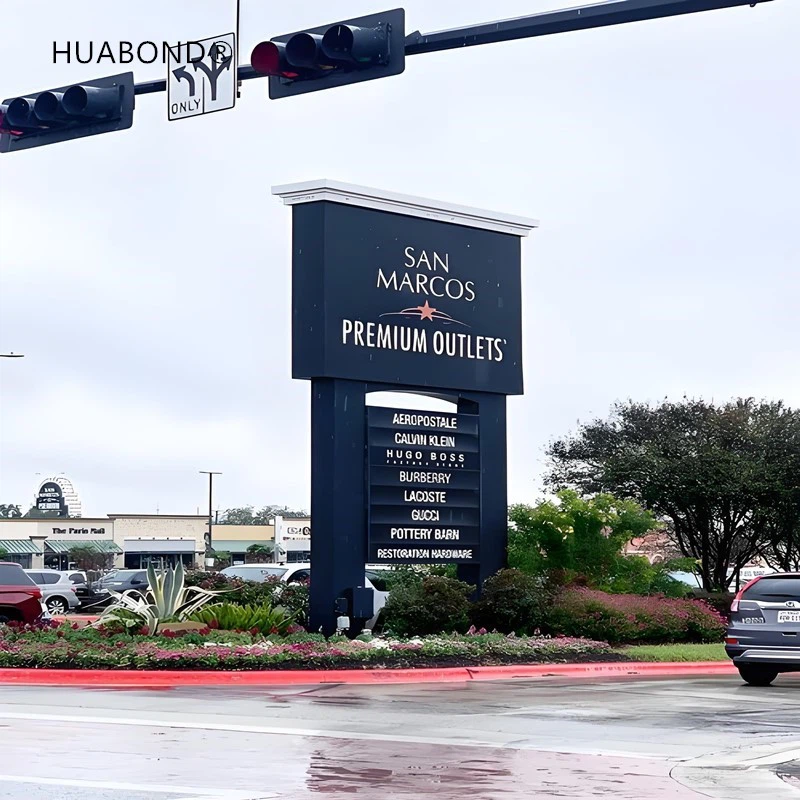
What determines the lifespan of outdoor billboards?
In the diverse climates of Europe and America-from the frigid cold of Canada to the scorching heat of Florida, from the humidity of Seattle to the dryness of Arizona-outdoor billboards must withstand multiple challenges, including ultraviolet radiation, drastic temperature changes, acid rain erosion, and salt spray corrosion.
The key to aluminum composite panels becoming the preferred material for outdoor advertising in Europe and America lies in their unique three-layer composite structure:
• Surface layer: High-strength aluminum alloy sheet (typically 0.1mm-0.5mm thick)
• Core layer: High-pressure low-density polyethylene (LDPE) or fire-resistant mineral core
• Coating: PVDF fluorocarbon coating or high-performance polyester coating. This structure gives aluminum composite panels their lightweight, high strength, and excellent flatness, while the surface coating directly determines their weather resistance.
I. Why do European and American markets prefer aluminum composite panels for outdoor signage?
Before discussing lifespan, we need to understand the core logic behind aluminum composite panels' dominance in the European and American outdoor advertising industry. It's not just about being cheaper, but about their superior overall performance:
1. Flatness and Visual Impact: Compared to single-panel aluminum, aluminum composite panels offer extremely high flatness, making them suitable for large-format UV printing and lamination, ensuring brand logos don't distort.
2. Lightweight: For the same area, they weigh only 60% of single-panel aluminum, significantly reducing steel structure costs and labor installation costs.
3. Easy Processing: Signage factories in Europe and America are generally equipped with CNC and grooving machines. Aluminum composite panels can be bent into various angles, making them suitable for creating three-dimensional light boxes and pillar signs.
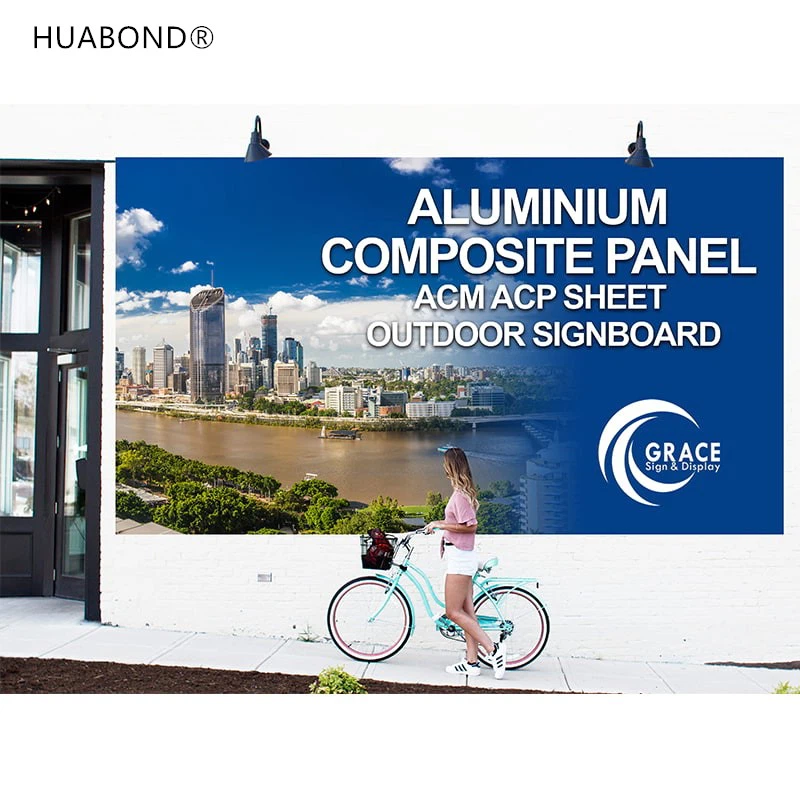
II. Core Decryption: How Many Years Can a Good Advertising Board Last?
We cannot give a general answer to this question; it must be graded based on the coating process.
According to internationally recognized testing standards (such as ASTM D6579 - Accelerated Aging Test Standard), the lifespan of aluminum composite panels mainly depends on the surface coating:
# 1. PE (Polyester) Coated Aluminum Composite Panels – 3-5 Years
* Market Positioning: Suitable for short-term promotions and temporary construction site fencing.
* Aging Performance: Under the strong ultraviolet radiation in Europe and America, PE coatings typically begin to show significant loss of gloss after 2 years, and may exhibit noticeable chalking and fading within 3-5 years.
# 2. PVDF (Polyvinylidene Fluoride/Fluorocarbon) Coated Aluminum Composite Panels – 10-15+ Years
* Market Positioning: Complies with AAMA 2605 standards (American Association of Building Manufacturers standard), suitable for customers seeking long-term, stable brand exposure.
* Aging Performance: This is the mainstream choice for owners in Europe and America. High-quality PVDF coatings have self-cleaning properties and strong UV resistance, with minimal color change over 10 years.

Over 75% of outdoor advertising projects in Europe and America choose PVDF coating systems. Although the initial cost is slightly higher, the average annual maintenance cost is reduced by more than 60%.
Conclusion: If you want your billboard to look brand new after 5 years, PVDF (fluorocarbon) coated aluminum composite panels are the only answer.
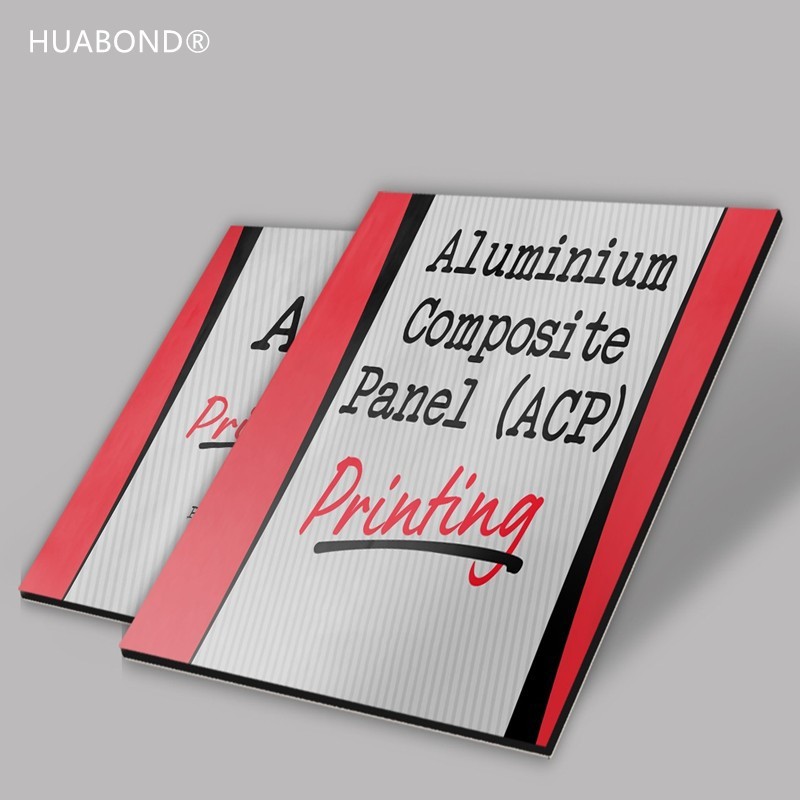
III. In-depth Data: 5-Year/10-Year Weather Resistance Test Results
To verify the authenticity of the "10-year lifespan" claim, we referenced accelerated aging data from laboratories based on ISO 9227 (salt spray test standard), ASTM G154 (ultraviolet aging test standard), and GB/T 22412-2016 standards.
Test Sample: 4mm thick PVDF fluorocarbon coated aluminum composite panel
Test Simulation Environment: Florida equivalent exposure (the world's most stringent outdoor exposure testing location)

Key Data Interpretation:
* Color Difference Value ΔE: ΔE < 1.5 indicates an extremely slight color difference, imperceptible to the naked eye. Test data shows that the PVDF coating maintains a color difference within 3.0 over 5 years, meaning your brand color (such as Starbucks' green or McDonald's yellow) will remain standard after 5 years.
* Salt Spray Resistance: Passed the 4000-hour test, meaning the material can easily withstand the high humidity and salt spray conditions of coastal areas (such as Miami, Los Angeles, and Sydney).
IV. Addressing Industry Pain Points: Why Does Your Billboard Fail in Less Than 2 Years?
Many European and American buyers have encountered "inferior panels," leading to misunderstandings about aluminum composite panels within the industry. As the source factory, we must reveal the three major culprits leading to premature failure:
1. The "Recycled Core" Trap: Inferior manufacturers use recycled plastic as the core material. This material is highly susceptible to unevenness (orange peel effect) due to thermal expansion and contraction, and may even crack during freeze-thaw cycles.
2. Insufficient Coating Weight: Standard PVDF coating thickness should reach 25μm-35μm. Many low-priced panels have a coating thickness of only 15μm and do not add sufficient amounts of Kynar 500 (Arkema fluorocarbon resin) or Lumiflon (Daikin fluorocarbon resin), essentially giving the billboard a "torn raincoat."
3. Neglecting Peel Strength: Standards require a peel strength of ≥4.0N/mm. If the value is below this, the aluminum sheet and plastic core will separate and fall off under bending or wind pressure, which is an extremely serious safety accident.
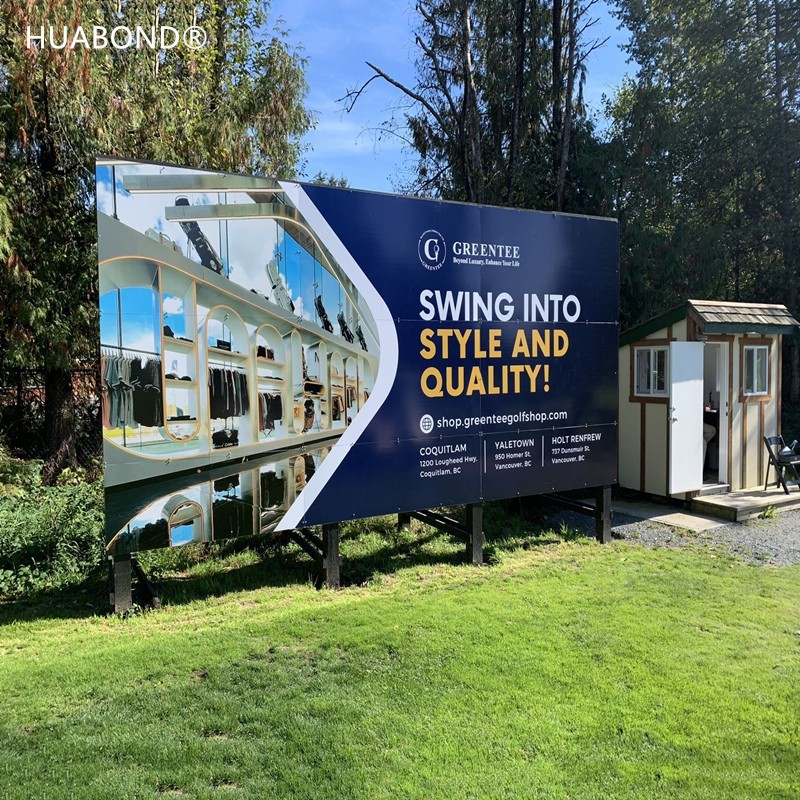
V. Real-world Application Case Studies
Case 1: Toronto 401 Highway Billboard Complex
• Material: PVDF-coated aluminum composite panel (4mm thick, 0.3mm aluminum sheet)
• Installation Time: 2012
• 2022 Inspection Results: Color difference ΔE only 3.2, gloss retention rate 87%, no delamination or deformation
• Estimated Remaining Life: 5-8 years
Case 2: US Gas Station Convenience Store Entrance
• Requirements: 24-hour lighting, large temperature difference.
• Solution: Use high-brightness PVDF-coated panels, which are heat-resistant, highly reflective, and can withstand the chemical corrosion of car wash liquid.
Case 3: European Highway Pole Billboard
• Requirements: Wind pressure resistant, long-term maintenance-free.
• Solution: Use 4mm thick reinforced aluminum composite panels with high peel strength to prevent strong winds from blowing off the panels.
Case 4: Los Angeles International Airport Terminal Signage
• Material: A2 fire-resistant PVDF aluminum composite panel
• Installation Time: 2015
• 2024 Inspection Results: Salt spray corrosion rating 9, coating adhesion rating 0
• Condition: Appears brand new, no maintenance records
How to ensure your purchased aluminum composite panels meet their promised lifespan?
1. Check coating thickness: PVDF coating dry film thickness should be ≥25μm (micrometers)
2. Request third-party testing: Peel strength and weather resistance tests should be issued by CMA/CNAS or SGS certified laboratories.
3. Choose reputable brands: Products from brands such as 3A Composites, Alucobond, and Huabond have undergone long-term market validation.
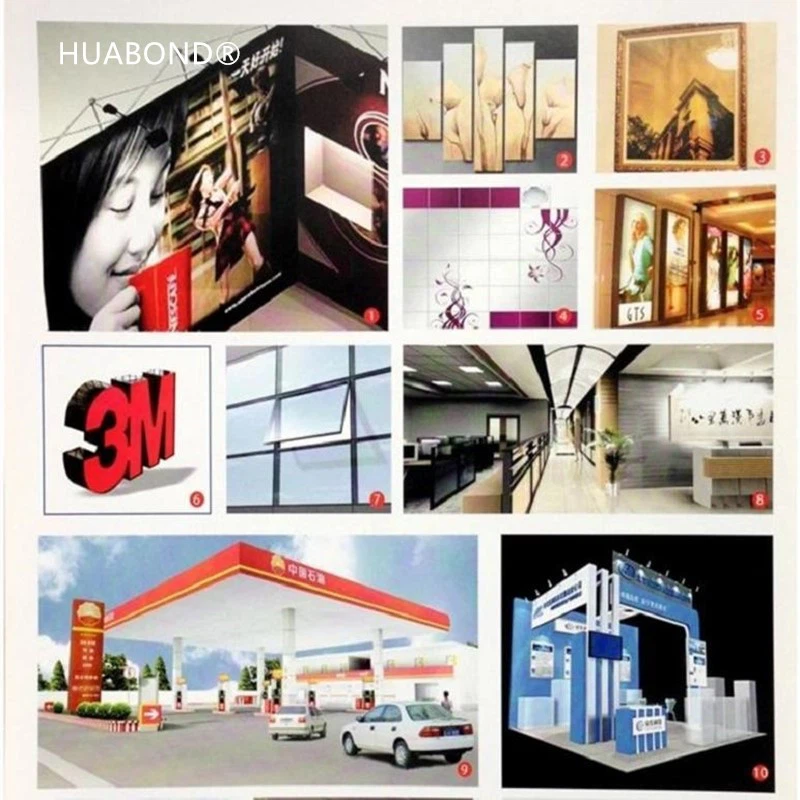
In conclusion, data proves that aluminum composite panels are the long-term preferred choice for outdoor advertising in Europe and America. Based on all test data and practical cases, we can clearly answer that the design lifespan of high-quality PVDF-coated aluminum composite panel outdoor billboards is 15-20 years. Even after 5-8 years of rigorous weathering testing, the degradation in appearance and performance is controlled within 5%.
For purchasing decision-makers in the European and American advertising industry, choosing aluminum composite panels is not just choosing a material, but choosing a business solution with low maintenance costs, high visual quality, and long-term return on investment.