

In the field of drones that pursue extreme performance, weight is the eternal enemy, and structural strength is the bottom line of survival. When engineers gazed at the sky, nature had already given a subtle answer: honeycomb. The perfect arrangement of hexagons creates amazing strength and rigidity with the least amount of material. This crystallization of bionics wisdom is the core secret of modern drone lightweight design - aluminum honeycomb structure. When the light aluminum foil is transformed into a core material as hard as a rock under precise craftsmanship, a lightweight revolution in the sky has begun.


1. Aluminum honeycomb structure: the core code of lightweight design
Aluminum honeycomb structure is essentially a sandwich composite material:
* Surface layer (panel): usually made of thin and high-strength materials, such as aluminum alloy sheets (2024, 7075, etc.), carbon fiber composites or glass fiber composites. The panel bears the main bending and in-plane loads.
* Core layer: that is, aluminum honeycomb core material. It is made of a large number of hexagonal (most common, there are other shapes such as over-stretched hexagonal, rectangular) aluminum foil cells connected by gluing or brazing. The core material mainly bears shear loads and provides core functions - separating the two layers of panels, greatly increasing the section moment of inertia of the structure.
The secret of its lightweight comes from the exquisite mechanical principles:
* High specific stiffness and specific strength: The bending stiffness of the sandwich structure is proportional to the square of its core thickness. This means that, with the same panel material, increasing the thickness of the honeycomb core can significantly improve the stiffness of the overall structure, while the weight increase is relatively small. The density of the aluminum honeycomb core itself is extremely low (usually in the range of 30-150 kg/m³, much lower than the 2700 kg/m³ of solid aluminum), which makes the entire sandwich structure have extremely high specific stiffness (stiffness/density) and specific strength (strength/density). For components such as drone fuselage panels and wing skins that bear bending loads, this is a dream feature.
* Excellent compression and shear resistance: The hexagonal structure of the honeycomb can efficiently distribute the compression and shear loads transmitted by the panel to each cell wall. The honeycomb wall mainly bears axial force and has high material utilization efficiency. Reasonably designed honeycomb cores can provide excellent resistance to crushing and shearing.
* Energy absorption: When impacted or collided, the aluminum honeycomb core can absorb a large amount of energy through its own controllable crushing deformation, effectively protecting the internal equipment and structure, and improving the survivability of the drone.
* Multifunctional integrated platform: The closed cellular space formed by the honeycomb core provides a natural channel for wiring and installing small equipment. The honeycomb structure itself also has certain heat insulation and sound insulation properties.

2. Aluminum honeycomb core material: precision carving of manufacturing process
The performance of aluminum honeycomb core material is highly dependent on its manufacturing process:
* Material selection: Commonly used aluminum alloy foils include 3003 (good corrosion resistance), 5052 (medium strength, good corrosion resistance), 2024, 7075 (high strength). The thickness of the foil is usually between 0.02mm and 0.1mm, and it is selected according to the required core material density and strength.
* Forming process:
* Lamination bonding/brazing and stretching method: This is the most mainstream method. The aluminum foil coated with adhesive or brazing material is stacked at precise intervals and solidified or brazed at high temperature and pressure to form a solid node. Then the stacked block is stretched in a direction perpendicular to the foil and unfolded to form a continuous honeycomb core structure. The core material density is determined by the foil thickness and the node spacing (cell size).
* Corrugation forming method: Aluminum foil is pressed into a continuous corrugation, and then the corrugated sheets are stacked and glued together to form a honeycomb structure. This method has slightly lower flexibility.
* Key parameter control:
* Cell size: Refers to the width of the opposite sides of the honeycomb hexagon. Common sizes range from 1/8 inch (about 3.2mm) to 1 inch (about 25.4mm) or even larger. Small cells generally provide higher strength and stiffness, but the density may be slightly higher; large cells are lighter, but more easily deformed under local pressure.
* Foil gauge: Directly affects the thickness and strength of the honeycomb wall. The thicker the foil, the higher the core strength and stiffness, and the greater the density.
* Core density: The mass of the honeycomb core per unit volume (kg/m³). It is the core indicator for measuring the "weight" and "strength" of the core material, which is determined by the cell size and foil thickness. A balance needs to be struck between lightweight and required mechanical properties.
* Core direction (L vs. W): Honeycomb cores are anisotropic in mechanical properties. Generally, compression and shear properties parallel to the foil stacking direction (L) are better than those perpendicular to the stacking direction (W). The main load direction needs to be considered during design.
3. Sandwich structure manufacturing: the art and challenges of bonding
Strongly bonding the aluminum honeycomb core material with the high-strength face plate is the key to manufacturing high-performance sandwich structures:
* Adhesive selection: High-performance structural adhesive films, such as epoxy resin films, are mainly used. When selecting, it is necessary to consider the curing temperature (medium temperature curing about 120°C or high temperature curing about 175°C), toughness, environmental resistance (humid heat, salt spray, ultraviolet light), compatibility with the face plate material, etc.
* Surface treatment: It is essential to perform strict surface treatment (such as phosphoric acid anodizing, chromic acid anodizing or special primer) on the end faces of the aluminum alloy face plate and honeycomb core material to remove contaminants, increase the surface area, form a stable active surface, and ensure that the adhesive achieves the best bonding strength.
* Gluing process:
* Laying: Lay the lower panel, adhesive film, honeycomb core material (usually pre-assembled into the required shape), adhesive film, and upper panel on the mold in sequence.
* Vacuum bag curing: Seal the laid components with a vacuum bag, evacuate and apply uniform pressure (about 1 atmosphere), and then send them into an autoclave or oven. In the autoclave, a higher additional pressure (such as 3-5 atmospheres) can be applied, and the heating, insulation, and cooling curves can be precisely controlled to fully cure the adhesive and ensure a high-strength, defect-free bonding interface between the panel and the core material. This is the standard method for producing high-quality aviation-grade honeycomb structures.
* Press curing: For parts with simpler shapes and smaller sizes, curing can also be carried out in a press with a heating plate.
* Core filling and edge treatment: In order to meet the needs of installing fasteners, a potting compound composed of epoxy resin and microspheres is often injected into the required parts (such as connection points) for filling and reinforcement. The edges of sandwich panels are usually closed and protected using aluminum profiles, composite profiles or special edge banding.

4. Lightweight design challenges: Finding a balance between lightness and strength
Despite its significant advantages, the design and application of aluminum honeycomb structures also face many challenges:
* Damage sensitivity: The panels of honeycomb structures are relatively thin and are sensitive to local impacts (such as dropped tools, flying rocks, and hail). Impacts may cause the panels to dent or even puncture, or cause the core material to crush at the impact point. Crushing damage may be hidden under the panels and difficult to visually detect (Barely Visible Impact Damage, BVID), but it will significantly weaken the structural strength. When designing, it is necessary to consider adding local reinforcement or choosing more impact-resistant panel materials (such as carbon fiber composites).
* Moisture intrusion and corrosion: If edge seals or panel damage cause moisture to intrude into the honeycomb core, ice expansion in low temperature environments will expand the honeycomb, causing "water entrapment" or "core splitting". Long-term retention of moisture may also cause corrosion of aluminum honeycombs. Good sealing design and maintenance are essential. New hydrophobic coating technologies are being introduced to actively resist moisture erosion.
* Connection design: Installing other components (such as motor brackets, landing gear, sensors) on the sandwich panel or connecting between panels is a design difficulty. Stress concentration will occur in the connection area, which is easy to cause core material crushing or panel peeling. The connection method must be carefully designed (such as using large-diameter bushings, increasing the panel thickness in the connection area, locally filling potting materials, using stepped overlap, etc.).
* Cost: High-quality aluminum foil, precision manufacturing processes (especially autoclave curing), strict quality control, and relatively complex assembly processes make the production cost of aluminum honeycomb sandwich structures usually higher than that of traditional metal sheet metal structures. Automated manufacturing technology and optimized design are the key to reducing costs.
* Modeling and analysis complexity: Accurately simulating the behavior of honeycomb sandwich structures under complex loads (bending, shear, torsion, compression, impact) is challenging. The core material is often equivalent to a homogeneous material and given equivalent mechanical properties for macroscopic analysis, but for details such as connection areas and impact damage, more sophisticated models (such as detailed modeling or the use of dedicated sandwich units) are often required.

5. Soaring in the sky: Typical applications of aluminum honeycomb in drones
Aluminum honeycomb structure has become the preferred structural solution for mid-to-high-end drones, especially fixed-wing, vertical take-off and landing (VTOL), and long-endurance (HALE/MALE) drones due to its excellent lightweight efficiency:
* Fuselage: It constitutes the fuselage shell (skin), bulkheads, floors, bulkheads, etc. It provides streamlined appearance, accommodates equipment, and bears flight loads (aerodynamic pressure, inertial force). The combination of carbon fiber panels + aluminum honeycomb core materials is extremely common.
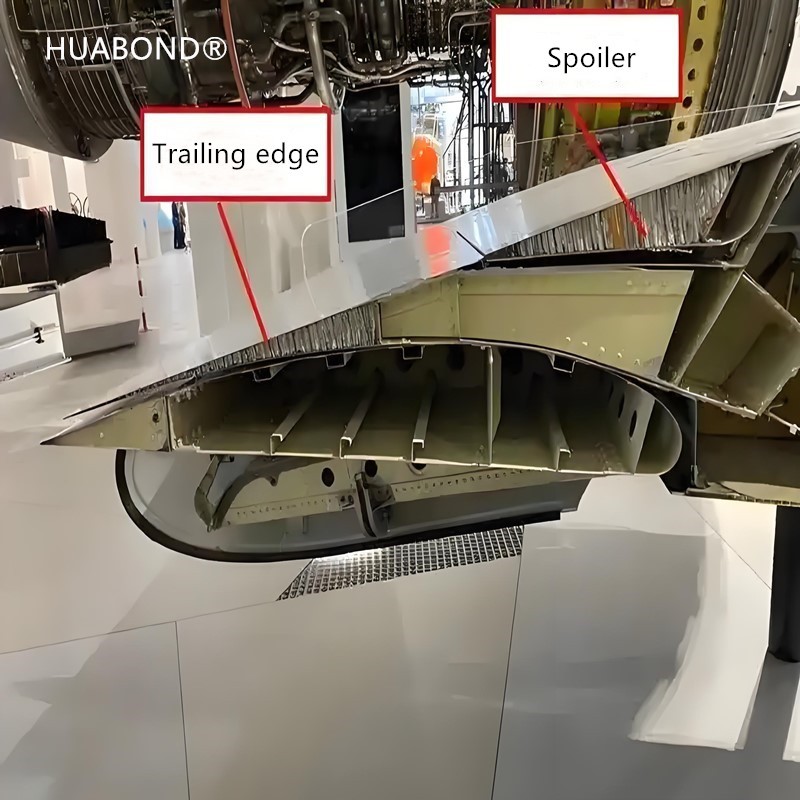
* Wing/tail: The upper and lower skins, leading and trailing edge structures, wing ribs, and control surfaces (ailerons, elevators, rudders) of the wing main box section (spar box) widely use honeycomb sandwich structures. This is one of the most significant parts for weight reduction and is crucial to improving flight time and maneuverability. DJI's Inspire series of high-end aerial photography drones use a sandwich design of aluminum honeycomb core and carbon fiber panels in the internal structure of its arms, providing the necessary stiffness and torsion resistance in demanding maneuvering flights while keeping the weight at an extremely low level.
* Fairings and canopies: used in engine compartments, equipment compartments, radar covers, etc. Provide aerodynamic shape and protection while requiring light weight. Radar covers also need to meet electromagnetic wave transmission requirements.
* Internal brackets and equipment mounting plates: used for precise installation of key equipment such as flight control computers, IMU inertial units, batteries, optoelectronic loads, etc., providing high-rigidity support to isolate vibration and ensure equipment working accuracy.

6. Future Outlook: Innovation Frontier on the Road to Lightweighting
The research and development and application of aluminum honeycomb structures are still evolving:
* Hybrid core material structure: In the same component, according to the difference in load distribution, core materials with different densities, different cell sizes and even different materials (such as aluminum honeycomb and PMI foam, Nomex honeycomb) are combined to achieve better performance-to-weight ratio and cost-effectiveness.
* Functional gradient honeycomb: The cell size or foil thickness varies continuously in space to better match the stress distribution of the component.
* Intelligent structure and health monitoring: Embed optical fiber sensors, piezoelectric sensors, etc. into the honeycomb core or bonding interface to monitor the strain, temperature, and damage of the structure (such as impact events, delamination initiation) in real time, realize structural health monitoring (SHM), and improve safety and maintenance efficiency.
* Application of advanced materials: Explore higher-strength aluminum alloy foils, titanium alloy honeycombs (for high-temperature areas), and the continued development of panel materials (such as higher-performance carbon fiber composites and ceramic-based composites).
* Additive manufacturing (3D printing): Metal 3D printing technology provides new possibilities for manufacturing core materials with complex topological optimization configurations (such as bionic lattice structures) or integrated functions, which is expected to break through the limitations of traditional honeycomb shapes and achieve more extreme lightweight and multifunctionality.
* More efficient manufacturing and connection technology: Develop automated paving, out-of-autoclave (OOA) curing processes, more reliable online non-destructive testing (NDT) technology, and innovative connection solutions to reduce costs and improve production efficiency.
Aluminum honeycomb structure, the crystallization of inspiration from honeycombs, has become an indispensable lightweight cornerstone for drones to soar into the sky. It achieves a strong structure with the lightness of foil, and writes the engineering aesthetics above the sky in the precise interweaving of materials and mechanics. Every weight reduction brings longer flight time, higher agility, and longer range to drones; every structural optimization expands the boundaries of human exploration of the sky. When the light aluminum honeycomb whispers at the core of the drone, it carries not only sophisticated equipment, but also mankind's never-ending yearning and conquest of the sky.


> Main references:
> 1. Gibson, L. J., & Ashby, M. F. (1997). *Cellular Solids: Structure and Properties* (2nd ed.). Cambridge University Press. *(Classic theoretical foundation of honeycomb materials)*
> 2. Hexcel Corporation. (2023). *HexWeb Honeycomb Sandwich Design Technology*. *(Technical manual of the world's leading honeycomb core material manufacturer, covering design, selection, and application)*
> 3. Vinson, J. R. (2001). *Sandwich Structures: Past, Present, and Future*. In J. R. Vinson & T. -W. Chou (Eds.), *Sandwich Structures 7: Advancing with Sandwich Structures and Materials* (pp. 3-12). Springer. *(Review of the development history and prospects of sandwich structures)*
> 4. Zenkert, D. (Ed.). (1995). *An Introduction to Sandwich Construction*. Engineering Materials Advisory Services Ltd. *(A practical guide to engineering design of sandwich structures)*
> 5. *Composite Structures* (journal). Elsevier. *(A high-impact international journal that continuously publishes the latest research results on sandwich structures, honeycomb materials, and lightweight design)*