

Daily crowds numbering in the hundreds of thousands, impacts from luggage, exposure to harsh cleaning agents, stringent fire safety mandates, and construction windows that allow no service interruptions-the demands placed on building materials in transport hubs are far more rigorous than those for commercial buildings.
When we delivered our first metro station project a decade ago, the client's first question wasn't "How much does it cost?" but rather "How long will it last?"
Today, this guide puts the material selection expertise we have gained from rail transit projects around the world directly into your hands.

I. Why are aluminum honeycomb panels used in transportation hubs?
Consider a real-world case study: a subway renovation project in a European city initially specified 3mm-thick solid aluminum panels for the platform wall cladding. Just six months after installation, the panels' excessive weight caused the supporting framework to deform; the panel surfaces developed wavy undulations, and in some areas, the bonding failed, causing the panels to bulge. Ultimately, the entire installation had to be removed and replaced with 15mm-thick aluminum honeycomb panels, which completely resolved the issue.
This story illustrates the core value of aluminum honeycomb panels:
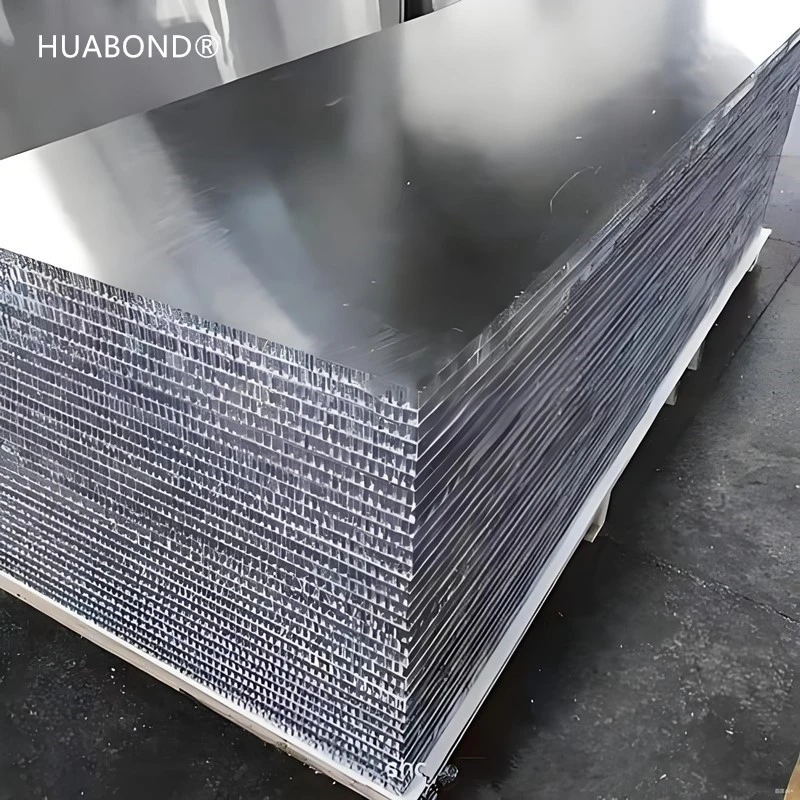
Aluminum Honeycomb Panel = Two Aluminum Face Sheets + Aluminum Honeycomb Core + High-Temperature Bonding
This biomimetic structure delivers a unique combination of properties: extremely low weight and exceptionally high rigidity.
A solid aluminum panel with equivalent rigidity weighs five to eight times as much; an aluminum-plastic composite panel of the same weight offers less than one-third of the rigidity.
In environments like transportation hubs-characterized by high foot traffic, stringent safety standards, and extremely limited windows for maintenance-these physical characteristics make aluminum honeycomb panels the superior choice.
II. Fire Safety: Not an Option, but a Bottom Line
Fire safety requirements for underground rail transit spaces are among the strictest in the building materials sector. Compliance with EN 45545 (EU railway fire safety standards) and GB 8624 Class A2 (Chinese standard for non-combustible materials) represents a mandatory threshold that cannot be bypassed.
Lesson 1: Not all aluminum honeycomb panels meet fire safety standards.
The key lies in the bonding adhesive and the surface coating. Standard polyurethane adhesives soften or even burn at high temperatures; only aluminum honeycomb panels utilizing thermosetting epoxy adhesives or inorganic, non-combustible adhesives can truly pass the Class A2 non-combustibility test.
For a Middle East metro project, we conducted comprehensive EN 45545 testing on our panels-covering a full suite of metrics such as smoke density, toxic gas emissions, and heat release rates-at the client's request. The product that ultimately passed the tests relied on an inorganic bonding system. This lesson is worth a fortune: when selecting aluminum honeycomb panels for metro projects, the first question to ask is what type of adhesive system is used.
Lesson 2: Coatings must be factored into fire safety calculations.
PVDF fluorocarbon coatings offer superior flame retardancy compared to standard PE coatings. If a project requires a Class A2 non-combustible rating, the coating system itself must also be non-combustible or flame-retardant. Some projects utilize powder coatings (such as PVDF or FEVE) on aluminum panels; this ensures weather resistance without compromising the overall fire safety rating.
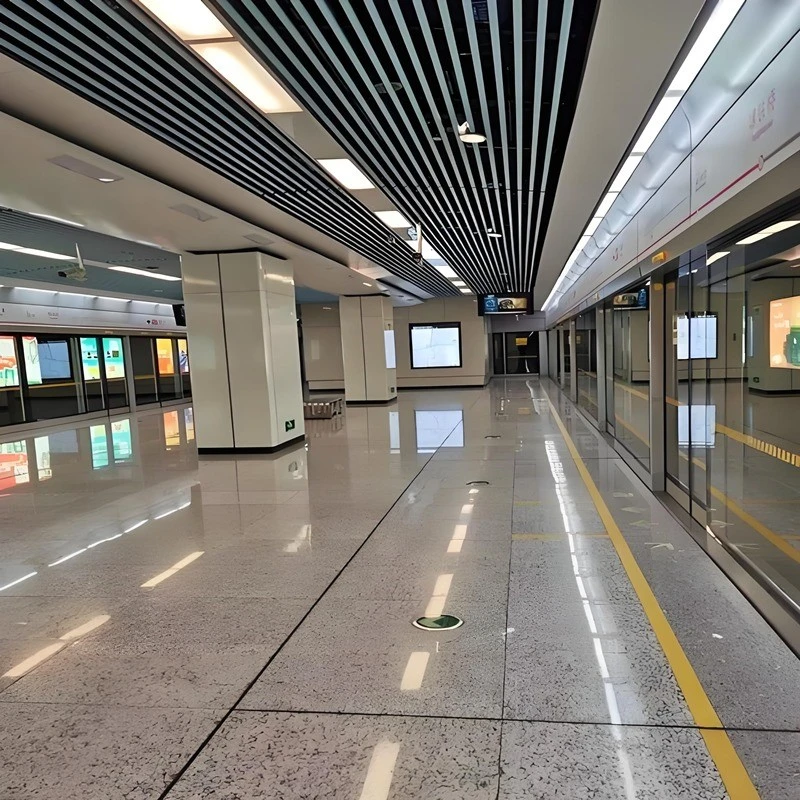
III. Durability: The true test lies in heavy foot traffic
Subway station walls, columns, and ceilings are subjected to the following daily:
- Mechanical impact: Luggage, carts, and crushing pressure from crowded conditions
- Chemical exposure: Chlorine-based cleaners, de-icing agent residues (at elevated stations in winter), and even graffiti removers
- Drastic fluctuations in temperature and humidity: Temperature differences of up to 20°C between platform and tunnel areas, accompanied by high humidity and condensation
Lesson 3: Face sheet thickness determines the lower limit of impact resistance.
We never recommend using aluminum honeycomb panels with face sheets thinner than 1.0 mm in areas accessible to pedestrians. The standard configuration for platform-level wall panels consists of a 1.2 mm face sheet and a 1.0 mm back sheet, with a total thickness of 15–20 mm. This setup can withstand a head-on impact from a 20 kg suitcase moving at normal speed without sustaining permanent dents.
Lesson 4: The wrong coating choice leads to deterioration within three years.
For aluminum honeycomb panels in subway stations, the surface coating must withstand the dual challenges of artificial lighting and cleaning agents. While UV radiation is not the primary threat, the chemical corrosion caused by cleaning agents and the wear and tear from frequent wiping cannot be overlooked.
We recommend:
- Platform and passageway levels: PVDF fluorocarbon coating or high-performance powder coating, offering resistance to chemical cleaners and abrasion.
- Concourse and ticketing areas: FEVE coating may be selected to achieve a higher-gloss visual effect.
- Elevated station facades: PVDF or FEVE coatings are mandatory to withstand UV-induced aging.
A Nordic client used PVDF-coated aluminum honeycomb panels for an elevated station facade ten years ago, and color retention remains above 90% to this day. In contrast, a comparison project using standard polyester coating during the same period began receiving complaints about color deviation as early as the fifth year.
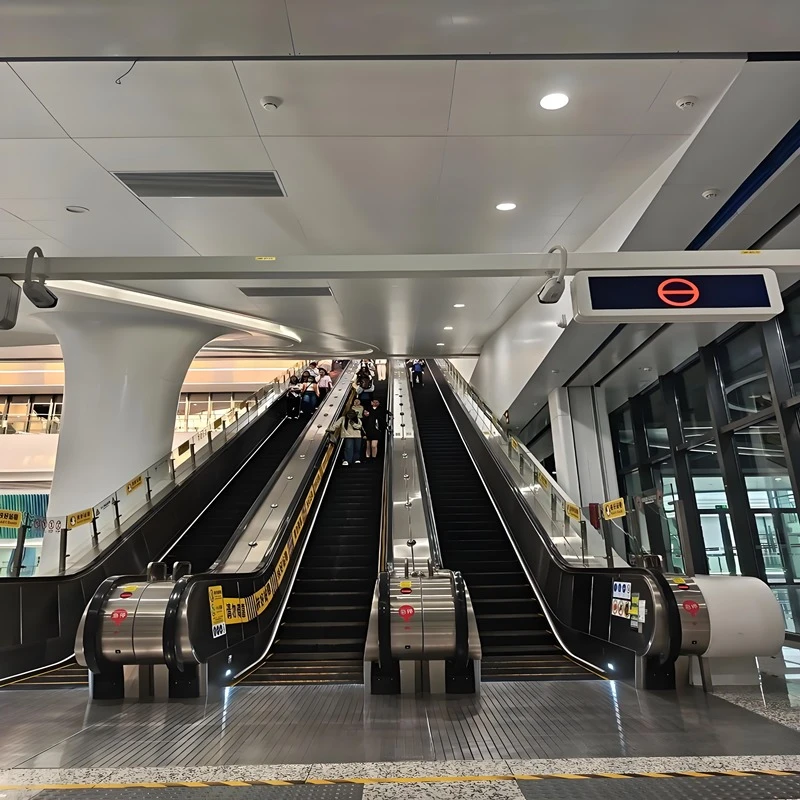
IV. Installation Efficiency: A Three-Hour Race Against Time
Construction windows at transportation hubs typically fall between 1:00 AM and 4:00 AM. Within this three-hour span, the removal of old panels, inspection of the support framework, installation of new panels, and site cleanup and departure must all be completed. Consequently, panel installation efficiency is not merely a bonus-it is a critical factor for success.
Lesson 5: Lightweight design is the key to easy installation.
A single person can handle and position a 4-square-meter aluminum honeycomb panel. In contrast, a solid aluminum panel of the same size requires at least two people and mechanical lifting equipment. This difference becomes even more significant given the narrow passageways and limited workspace found in subway stations.
Lesson 6: Modular prefabrication simplifies on-site work to a simple "hanging" process.
We implemented a "factory-installed mounting system" for the project. Specialized aluminum alloy mounting brackets are pre-installed on the back of the panels before they leave the factory; on-site, workers simply hang the panels onto the framework, then level and secure them. A skilled team can complete the installation of 20 to 30 square meters of wall paneling within a three-hour work window-a speed unattainable with traditional welding or adhesive-based fixing methods.
V. From Material Selection to Delivery: Our Checklist
Based on experience with multiple rail transit projects, the following is our recommended pre-procurement checklist:
| Item for Verification | Why It Matters | Our Standards |
| Fire Rating | Mandatory rail transit requirement; non-compliance = unusable | Class A2 / Full EN 45545 compliance |
| Panel Thickness | Determines minimum impact resistance | ≥1.0mm (wall) / ≥0.7mm (ceiling) |
| Adhesive | Determines fire resistance and long-term bond strength | Epoxy / Inorganic non-combustible adhesive |
| Surface Coating | Determines durability and ease of cleaning | PVDF / FEVE / High-performance powder coating |
| Mounting System | Determines installation efficiency | Pre-installed aluminum alloy mounting brackets |
| Color Consistency | Visual impact in public spaces | Batch-to-batch ΔE ≤ 1.5 |
| Acoustic Performance | Noise control requirements | Compatible with micro-perforated sound-absorbing surface |
VI. A Note to Designers and Contractors
The value of aluminum honeycomb panels in transportation hubs extends far beyond the price of the material itself. Their true worth lies in significantly reduced maintenance costs over a decade, highly efficient late-night installation, and the visible sense of safety and quality experienced daily by hundreds of thousands of passengers.
We deliver more than just panels; we provide a wall system capable of withstanding the test of time, heavy foot traffic, and rigorous standards.
Working on a rail transit project? Send us your project drawings or specifications, and within 24 hours, we will provide a comprehensive technical proposal-covering fire safety, acoustics, and installation methods-along with product samples.