


Lightweight Properties: Weighing only 3.5–5.5 kg per square meter-approximately 45% of the weight of solid aluminum, 40% of glass, and 30% of stone of equivalent thickness-aluminum composite panels (ACP) significantly reduce structural loads and lower transportation and installation costs. A 4mm-thick panel has an area density of approximately 5.59 kg/m².
Weather Resistance: PVDF (polyvinylidene fluoride) fluorocarbon coatings can withstand harsh outdoor environments for over 20 years. After 4,000 hours of accelerated aging tests, the color difference (ΔE) remains ≤5, with a gloss retention rate of ≥90%. For curtain wall applications, the PVDF coating thickness should be no less than 25μm. FEVE (fluoroethylene vinyl ether) fluorocarbon coatings offer similarly superior weather resistance while allowing for higher gloss levels. High-durability polyester (HDPE) coatings typically provide an outdoor service life of 6–9 years, making them suitable for general exterior curtain walls and signage.
Design Flexibility: ACP can be cut, grooved, and bent using standard woodworking tools, allowing for the creation of various shapes, such as curves or right angles. They can be customized to any Pantone or RAL color, and surfaces can be laminated to feature decorative finishes like wood grain or marble.
Strategic Value: By reducing the amount of structural framing required (due to their lightweight nature), minimizing the frequency of renovations (thanks to weather resistance), and enhancing project value through design versatility, ACPs offer a unique balance-a key reason for their sustained leadership in the global curtain wall and decoration sector.
Aluminum composite panels have been a fixture in the global construction market for decades. Yet, many purchasers still view them merely as a "cheap alternative to solid aluminum panels." This is a significant misconception.
The true value of aluminum composite panels lies in their ability to resolve three classic dilemmas in construction materials: the conflict between weight and rigidity, the trade-off between durability and cost, and the tension between standardization and personalization. These three areas-lightweight properties, weather resistance, and design flexibility-constitute the core competitive advantages that distinguish aluminum composite panels from other curtain wall materials. HUABOND has been manufacturing aluminum composite panels for 32 years. Over these three decades, we have witnessed various scenarios: projects where the wrong panel thickness led to excessive loads on curtain walls; instances where an improper coating choice caused colors to fade within just three years; and, conversely, projects where designers utilized aluminum composite panels to create curved architectural forms that would have been impossible to achieve with traditional materials. Below, we provide a comprehensive breakdown of these three key aspects.
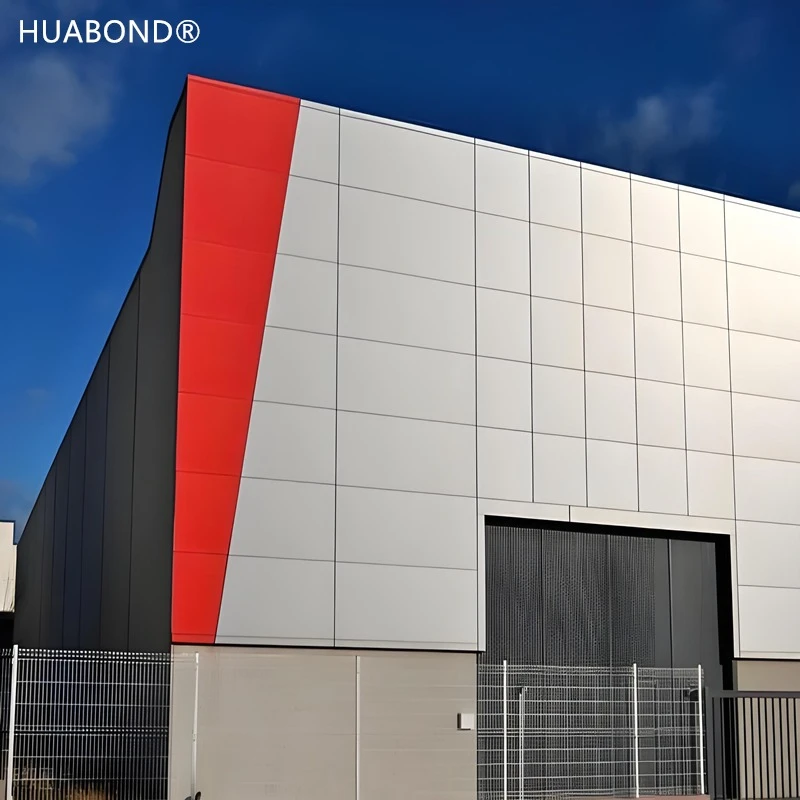
I. Lightweighting: More Than Just "Being Lighter"-A Fundamental Shift in Structural Logic
1.1 How light are aluminum composite panels (ACPs) exactly?
Aluminum composite panels consist of an aluminum face sheet, a polyethylene core, and an aluminum back sheet. The density of the core material is significantly lower than that of metal, which drastically reduces the weight per unit area of the entire panel.
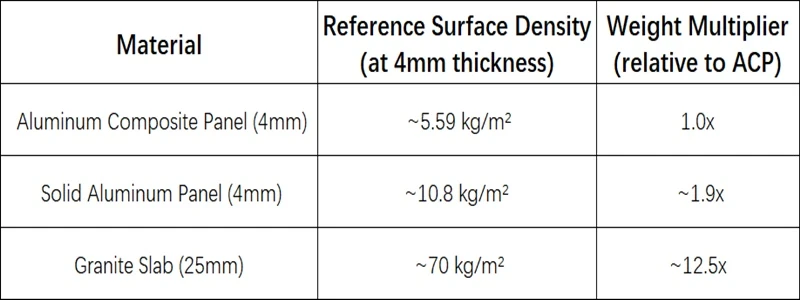
Data sources: The measured surface density of a 4mm aluminum composite panel is approximately 5.59 kg/m²; the specific weight (gravitational density) of granite is approximately 28 kN/m³. A 3mm aluminum composite panel has a surface density of approximately 3.86 kg/m².
To put it intuitively: the weight of an aluminum composite panel is approximately 45% that of an aluminum sheet of the same thickness, 40% that of glass, and 30% that of stone.
1.2 The Real Value of Lightweight Construction for Projects
First, it reduces the cost of the primary structural system. The dead load of curtain wall materials is transferred directly to the building's beams, columns, and foundations. A stone cladding panel, for instance, can weigh more than ten times as much as an aluminum composite panel (ACP). By replacing stone or solid aluminum panels with ACPs, the required quantities of steel reinforcement and concrete for the primary structure can be reduced-a saving that compounds with every additional floor in high-rise buildings.
Second, it reduces the amount of framing (substructure) required. Because ACPs are lightweight, the spacing between the supporting members (girders/mullions) can be increased, leading to a reduction in both the amount of framing material needed per unit area and the labor required for installation. In large-scale curtain wall projects, the cost of the framing system and labor typically accounts for 40% to 60% of the total project cost; therefore, the savings in these areas far outweigh any price difference in the cladding panels themselves.
Third, it lowers transportation and installation costs. A single large-format ACP can be easily handled and positioned by one worker, whereas stone or solid aluminum panels would require two or more people, often in conjunction with mechanical lifting equipment. For projects with tight construction windows-such as metro stations or airports-this difference can directly impact the project timeline.
Fourth, it offers a distinct advantage for the renovation of existing buildings. In many facade retrofit projects, the original structural design cannot support the weight of stone or heavy metal panels. The lightweight nature of ACPs makes them perhaps the only viable solution for such renovations. A case in point is the "The Orbit" office building project in Athens, which utilized the lightweight properties of aluminum composite panels to update its facade without significantly increasing the load on the original structure.
32 Years of Experience: "Lightweight" is not synonymous with "cheap." Rather, it fundamentally alters the structural economics of the entire building. A savvy purchaser-one who looks at the total cost-will not focus solely on the price per square meter of the cladding material.
II. Weather Resistance: The Coating Determines the Panel's Lifespan
2.1 The Coating: The Key to Weather Resistance in Aluminum Composite Panels (ACP)
The aluminum face sheets and the core layer of an aluminum composite panel (ACP) are inherently stable. It is the surface coating system that truly determines how many years the panel can maintain its visual quality in an outdoor environment.
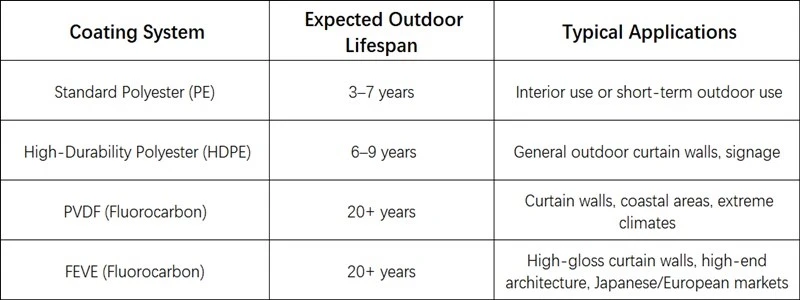
PVDF (polyvinylidene fluoride) fluorocarbon coating is one of the premier weather-resistant solutions for ACP curtain walls. Testing indicates that such coatings can last for over 20 years, even in harsh outdoor environments. High-Durability Polyester (HDPE) coatings typically offer a lifespan of 6–9 years in standard outdoor conditions; they are well-suited for general outdoor projects where long-term weather resistance requirements are not extreme and budget considerations are a priority.
FEVE (fluoroethylene vinyl ether copolymer) coating is another prominent member of the fluorocarbon family. It also provides superior weather resistance-exceeding 20 years-but distinguishes itself through its ability to cure at room temperature. Furthermore, it can achieve a higher initial gloss than PVDF (reaching high-gloss levels of over 80%). For projects seeking an "ultra-mirror-like" high-gloss finish, or for complex, irregularly shaped components that cannot undergo high-temperature baking, FEVE offers greater flexibility than PVDF. It is a well-established solution used in high-end architectural projects across Japan and Europe.
2.2 Weather Resistance Is Not Just a Slogan-It Can Be Quantified
A truly professional supplier lets the data speak for itself. Key quantitative indicators for the weather resistance of aluminum composite panels (ACP) include:
Color Retention. After 4,000 hours of accelerated aging testing, the color difference (ΔE) of a PVDF coating should not exceed 5 units (per the ASTM D2244 standard). For reference, a ΔE value of ≤1.5 is virtually imperceptible to the human eye, while a ΔE of ≤5 represents an acceptable, low-level variation.
Gloss Retention. Following the same 4,000-hour accelerated aging test, the PVDF coating should maintain at least 90% of its original gloss. A decline in gloss typically precedes noticeable color changes and serves as an early indicator of coating degradation.
Film Thickness as a Physical Baseline. To ensure a service life of 15 to 20 years or more in outdoor environments, the thickness of a PVDF coating must be at least 25 μm. For PVDF-coated aluminum composite panels used in curtain walls, the coating thickness is generally maintained between 25 μm and 30 μm; falling below this range compromises weather resistance.
Environmental Adaptability. High-quality PVDF-coated aluminum composite panels must remain stable across a temperature range of -40°C to +85°C and successfully pass both a 3,000-hour salt spray test and a 3,000-hour damp-heat test.
2.3 The Cost of Choosing the Wrong Coating
In our 32 years of experience, the most common weather-resistance failures we have encountered do not stem from issues with PVDF or FEVE-coated panels; rather, they arise when the wrong coating is specified-such as using HDPE where a fluorocarbon (PVDF/FEVE) coating is required, or using standard PE where HDPE should have been used.
For one coastal project, HDPE coatings were selected to keep costs down. However, under the combined impact of high salt-spray levels, high humidity, and intense UV radiation, the HDPE coatings began to show significant degradation after 6 to 9 years, eventually necessitating a complete renovation. The total cost of this renovation-covering scaffolding, removal, new panels, and installation-far exceeded the initial price difference for choosing PVDF in the first place.
The true cost of weather resistance is never just the price paid at the time of purchase; it is the total cost of ownership over a 20-year service life.
III. Design Freedom: Ensuring Architectural Visions Are Not Constrained by Materials
3.1 Ease of Fabrication as the Foundation for Design Freedom
The primary reason aluminum composite panels (ACP) are highly favored in the design phase is their exceptional ease of fabrication.
These panels can be cut, trimmed, grooved, and bent using standard woodworking tools. There is no need for specialized metalworking equipment, high-temperature welding, or complex molds. With just basic tools, flat panels can be shaped into curves, right angles, and a wide variety of three-dimensional forms.
This fabrication versatility leads to two direct benefits:
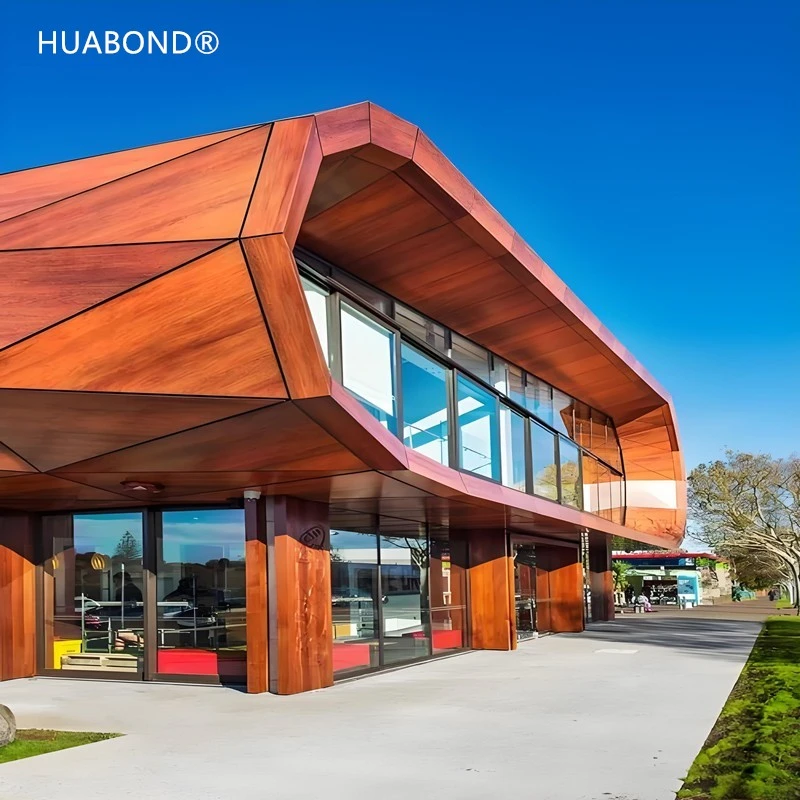
First, complex designs become economically viable. Features such as curved facades, custom-shaped ceilings, column cladding, window surrounds, and cornices-which would require expensive custom molds and high-cost processing if executed in stone or solid aluminum-can be achieved with aluminum composite panels while keeping costs under control.
Second, on-site adjustments are possible. Dimensional discrepancies are a common occurrence on construction sites. Aluminum composite panels can be fine-tuned during installation-cut, trimmed, or re-bent-unlike stone or pre-formed metal panels, which would have to be discarded if the dimensions proved incorrect.
3.2 Flexibility in Color and Surface Effects
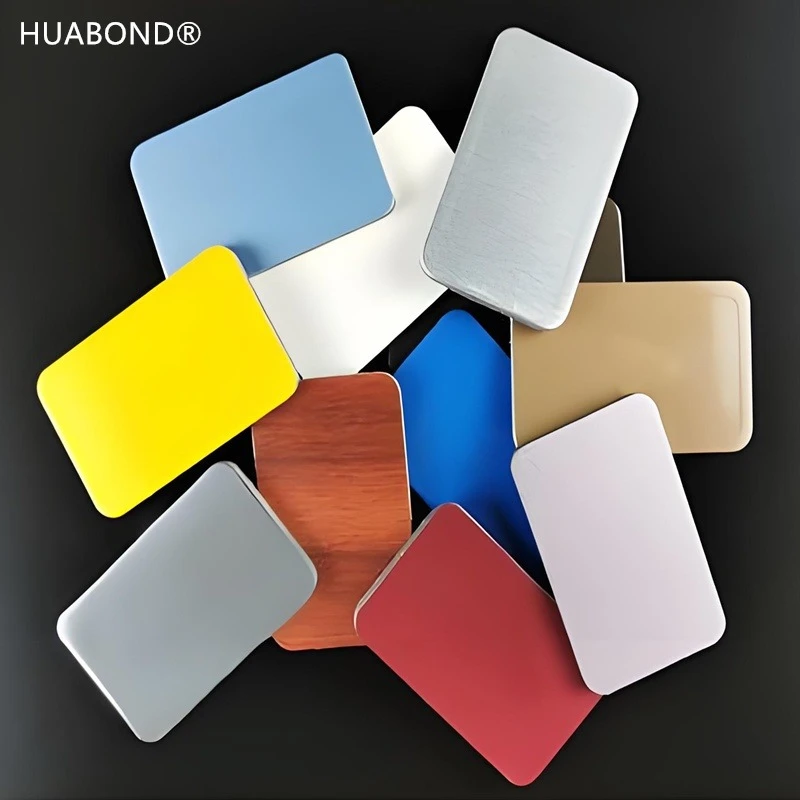
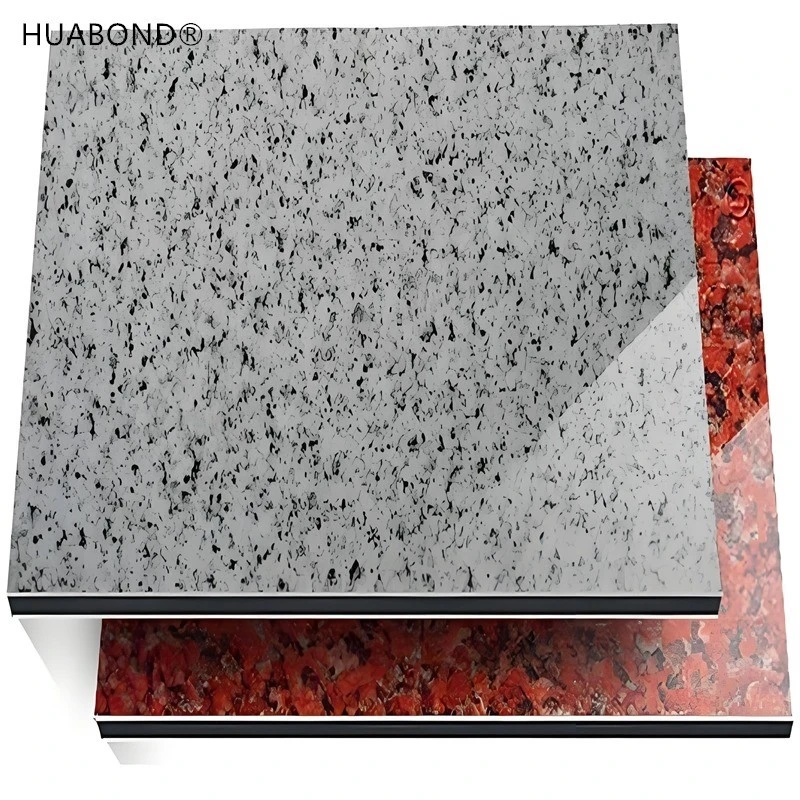
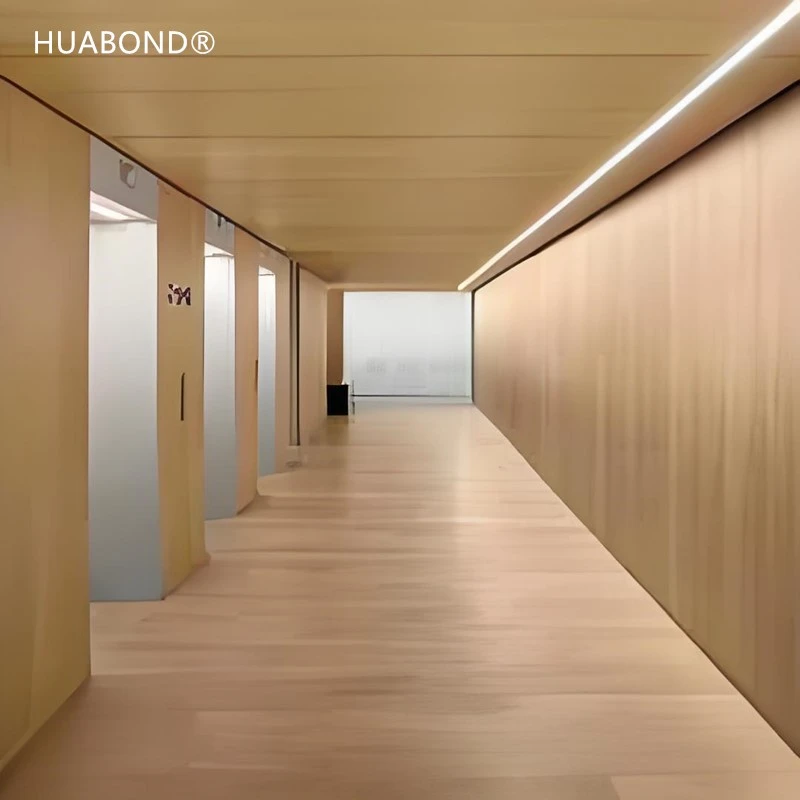
The decorative surface of aluminum composite panels (ACP) can be finished in a wide array of colors, including metallic, solid, pearlescent, and fluorescent tones. Furthermore, advanced simulation technology allows for the replication of textures found in natural materials-such as granite, wood grain, and various metals-offering a level of detail and tactile quality that standard solid-color coatings cannot achieve.
For brand-driven projects-such as automotive showrooms, retail chains, or hotels-ACP can be precisely color-matched to specific Pantone or RAL standards. During mass production, color consistency is maintained with a variance of ΔE ≤ 1.5 between batches, ensuring a uniform brand image across global locations.
3.3 Design Freedom in Real-World Projects
Several projects featured on ArchDaily demonstrate the expressive potential of aluminum composite panels (ACPs) when applied to complex geometric forms:
Citypassagen Office Building, Örebro, Sweden: The formability of ACPs enabled the creation of a unique, three-dimensional golden relief façade, while simultaneously meeting stringent fire-safety and durability requirements. The project utilized 4,000 m² of Class A2-rated aluminum composite panels.
The Orbit Office Building, Athens, Greece: The façade geometry folds and pivots at key junctions to accommodate vertical gardens and planters, with vegetation covering 90% of the site area. The ACPs are integrated into a custom curtain wall system that serves multiple functions: providing shading, housing planters, and facilitating drainage.
The Icon Limassol, Cyprus: The designers specifically chose aluminum composite panels because they required a "flexible, lightweight material that could be easily shaped into a diamond-like, rhomboid form."
The underlying logic across these projects is consistent: rather than selecting a material first and then determining the form, the requirements of the desired form dictate the choice of aluminum composite panels.
IV. The Synergy of Three Key Advantages: Why 1+1+1 > 3
Lightweight construction, weather resistance, and design flexibility-each of these qualities can be found in alternative materials when considered individually. However, it is the combination of all three that makes aluminum composite panels (ACP) virtually irreplaceable.
For a large-scale, complex-shaped curtain wall project, using solid aluminum panels to achieve curved forms would drive up the costs of the supporting framework and structural system due to the excessive weight. Opting for stone would be equally impractical, given both the weight and the high processing costs. Meanwhile, standard plastic panels would lack the necessary weather resistance, failing to last even five years. Only aluminum composite panels can simultaneously satisfy the requirements for being lightweight, durable, and highly formable within a single project.
Looking back at the projects we have supported over the past 32 years, the most successful outcomes have rarely come from clients simply purchasing a single, standardized type of panel. Instead, success has stemmed from our ability to help clients identify the optimal balance-tailored specifically to their project-between lightweight design, weather resistance, and creative freedom.
V. Frequently Asked Questions (FAQ)
Q1: Is an aluminum composite panel (ACP) really that much lighter than a solid aluminum panel?
Yes. A 4mm aluminum composite panel has an areal density of approximately 5.59 kg/m², compared to about 10.8 kg/m² for a 4mm solid aluminum panel-meaning the ACP weighs roughly 52% of the solid panel. For a 3mm thickness, the areal density of an ACP is approximately 3.86 kg/m². This lightweight advantage is further amplified in large-scale curtain wall projects, where it leads to significant savings in structural costs.
Q2: How do PVDF, FEVE, and HDPE coatings differ in terms of outdoor weather resistance?
Both PVDF and FEVE are fluorocarbon coatings, offering an outdoor weather resistance lifespan of over 20 years. After 4,000 hours of accelerated aging, PVDF maintains a color difference (ΔE) of ≤5 and a gloss retention of ≥90%. FEVE offers similarly superior weather resistance but can achieve higher gloss levels (over 80%), making it ideal for projects requiring a high-gloss aesthetic. HDPE coatings typically have an outdoor lifespan of 6–9 years. For projects in coastal areas, regions with high UV exposure, or landmark developments, the long-term cost-effectiveness of fluorocarbon coatings far outweighs the initial price difference; for standard outdoor projects, HDPE offers a balanced compromise between budget and performance.
Q3: Can aluminum composite panels be used for curved or doubly-curved (complex) forms?
Aluminum composite panels can be bent into arcs, right angles, and other shapes, making them suitable for single-curvature surfaces and a range of complex forms. For doubly-curved surfaces or complex geometries with very small radii, specific technical solutions and processing methods must be confirmed with the manufacturer's technical team. Projects featured on ArchDaily demonstrate the use of aluminum composite panels to realize complex design intents, such as three-dimensional relief facades and diamond-patterned geometries.
Q4: Does the lightweight nature of aluminum composite panels compromise their wind-load resistance?
No. The structural design of an aluminum composite panel utilizes the "I-beam" mechanical principle: the two aluminum face sheets, bonded to a core layer, create a stable internal stress structure that provides significantly greater rigidity than a single-layer material of the same weight. Wind-load resistance depends on the thickness of the aluminum face sheets, the quality of the core material, and the installation system-not merely on the weight of the material. For aluminum composite panels (ACP) used in curtain walls, the aluminum face sheet is typically at least 0.21 mm thick; for high-rise buildings or projects in coastal areas, a thickness of 0.30 mm or greater is recommended.
Q5: What weather-resistance test reports are available for HUABOND aluminum composite panels?
We provide test data covering parameters such as color difference, gloss retention, pencil hardness, adhesion, salt spray resistance, humidity/heat resistance, and accelerated artificial aging, in accordance with standards including ASTM D2244, ASTM D523, ASTM B117, and ASTM D714. For specific project requirements, we can also arrange for third-party testing by organizations such as SGS or TÜV.
Q6: For what types of projects is an FEVE coating suitable?
FEVE coatings are ideal for high-end architectural projects that require an ultra-high-gloss or mirror-like finish, combined with superior weather resistance-a solution already well-established in the Japanese and European markets. If a project demands a service life of over 20 years (comparable to PVDF) but requires a higher gloss level than PVDF can offer, FEVE is the superior choice.
Q7: Do you provide free samples?
We provide standard-colored A4-sized samples free of charge; however, the cost of international courier shipping is to be covered by the client. There is no color-matching fee for custom-colored samples, and any such fees paid will be refunded once a bulk order is confirmed.
VI. Material Selection Advice from a Manufacturer with 32 Years of Experience
HUABOND's 32-year history is intrinsically linked to the evolution of aluminum composite panels (ACP). From coating formulations and lamination processes to installation systems, we have witnessed both the full potential of this material and the unfortunate waste that occurs when the wrong specifications are chosen.
Lightweight properties, weather resistance, and design flexibility are not merely independent parameters; they form a decision-making framework that should be prioritized based on the specific needs of your project.
If your project's primary constraints are structural load, transportation, or installation costs, prioritize your budget toward a lightweight configuration-utilizing a virgin-material core and optimized aluminum skin thickness.
If the greatest risks involve long-term maintenance or future renovation costs, focus your budget on weather resistance-opting for PVDF or FEVE coatings, sufficient film thickness, and anti-corrosive back-coatings.
If the project's core value lies in architectural form and brand identity, allocate your budget toward design flexibility-leveraging custom colors, decorative films, factory pre-bending, and specialized fabrication for complex shapes.
Share your project type, local climatic conditions, design intent, and budget constraints with us. Drawing on 32 years of expertise in material specification, we will help you identify the "perfect" aluminum composite panel solution.
Get a Tailored Aluminum Composite Panel Solution and Samples
Send details regarding your application (curtain wall, interior, or signage), design requirements, and performance goals to our email. Within 24 hours, we will provide a technical proposal-including recommended panel specifications, coating options, and transparent pricing. We also offer free samples of standard colors (international shipping costs to be covered by the client).
[Request Your Technical Proposal and Samples Now]