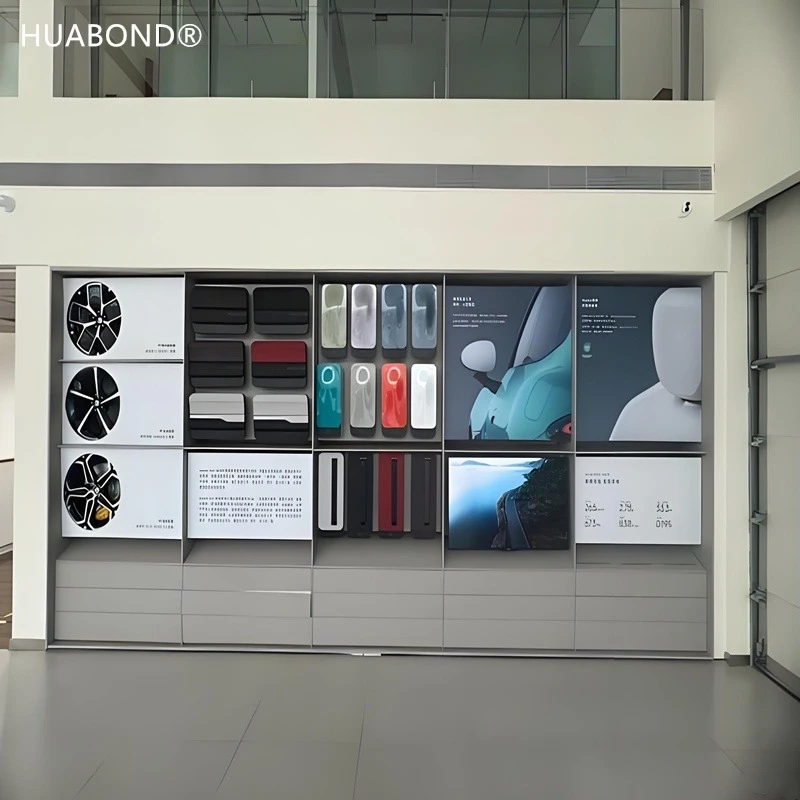
30-Second Summary:
- Automotive showrooms worldwide are undergoing a profound transformation, shifting from mere "functional sales outlets" to "brand experience spaces." McLaren is redesigning its showrooms to emulate the style of luxury boutiques like Gucci; Bentley is introducing immersive, hospitality-inspired environments; and Ford is reimagining the customer journey through "hospitality-style retail."
- Aluminum composite panels are the core material driving this transformation: they support large-format modularity, seamless joining, and custom color matching, simultaneously delivering brand consistency, long-term durability, and a premium visual aesthetic.
- Major global automakers-including Toyota, Ford, Mercedes, BMW, Porsche, and Lexus-have adopted aluminum composite panels at scale for signage and façade applications across their showroom networks; Toyota, for instance, incorporated them into its national dealership construction standards over two decades ago.
- With 32 years of expertise in manufacturing aluminum signage panels, HUABOND provides one-stop solutions-ranging from raw panels to finished signage-for brand display projects in over 50 countries worldwide.
I. What's Happening in Car Showrooms: A Material-Driven Brand Upgrade
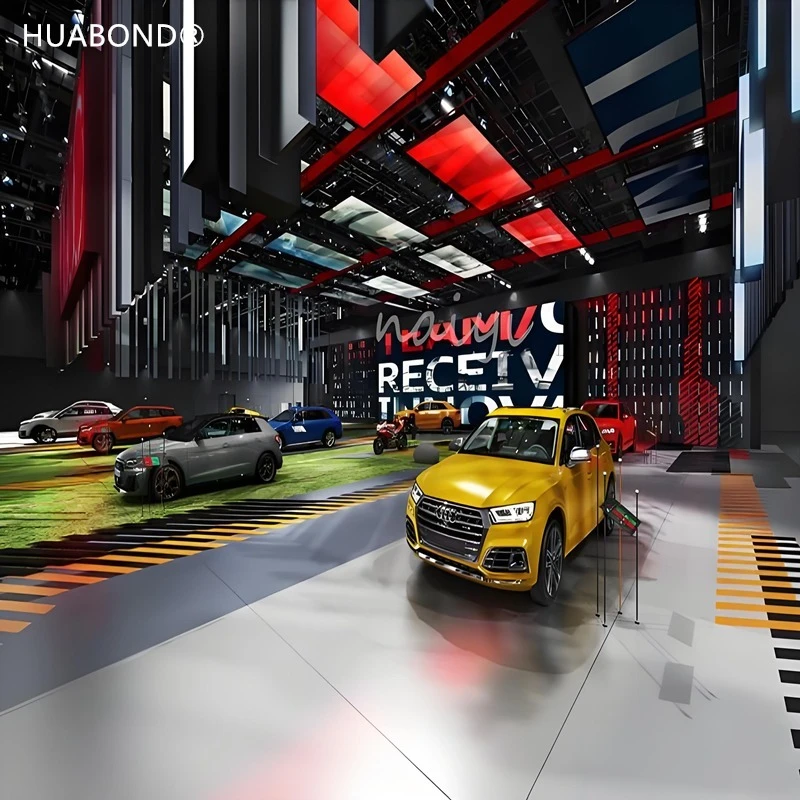
A clear signal emerges when observing the moves made by mainstream global automotive brands for 2025–2026: showrooms are no longer merely places to sell cars; they have become "physical flagships" for brand experiences.
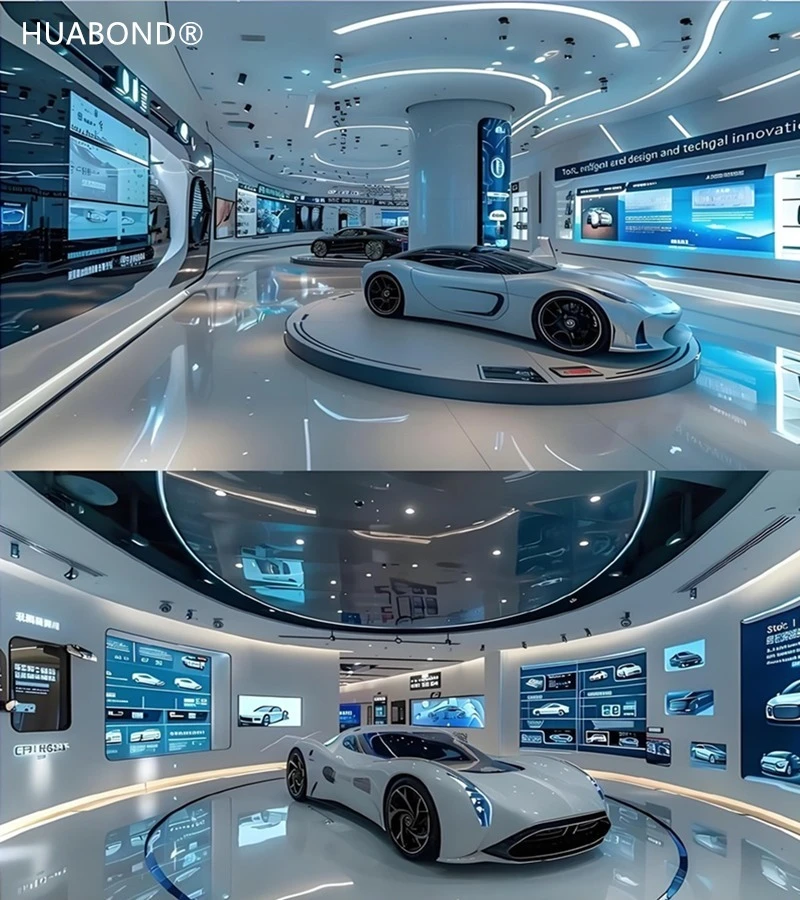
McLaren has announced a "high-end boutique" transformation plan for its global dealer network. Showroom designs are modeled after luxury watch and fashion retailers, featuring wood paneling, warm lighting, and private consultation rooms, with a minimum investment of $1 million per location. Bentley has introduced a new global retail concept that replaces traditional linear showrooms with hospitality-style spaces; reception desks give way to bar counters, and "Atelier" customization workshops become the heart of the space. Meanwhile, Ford has launched its "Signature 2.0" standard, reshaping the dealership experience through "hospitality-style retail." The first locations are set to open in Ohio in 2026, with plans to expand to 110 stores worldwide.
The common thread in these changes is that every surface, sign, and wall within the showroom now plays a role in conveying the brand's narrative.
Consequently, brand requirements for display materials have evolved: they must be flat enough to support large-scale branding, durable enough to meet unified global standards, flexible enough to realize bespoke design concepts, and lightweight enough to minimize renovation costs.
These requirements align perfectly with the strengths of aluminum composite signage panels.

II. Why Have Aluminum Composite Panels Become the Preferred Choice for Brand Display in Automotive Showrooms?
2.1 A Common Choice Among Global Automakers
The use of aluminum composite panels in automotive showrooms is not a new trend but a proven industry standard.
Alcoa's Reynobond® aluminum composite panels have been widely used in showroom projects for major global automotive brands, including Toyota, Lincoln Mercury, Chevrolet, Lexus, Honda, Hyundai, Ford, Jaguar, Land Rover, Porsche, Acura, Mercedes, and Nissan.
Since 2001, Toyota Australia has incorporated ALPOLIC® aluminum composite panels into its national dealership construction standards, designating them as the specified material for showroom facades and signage. At the first dealership to utilize this material-located in Pennant Hills-the original panels remain in their original condition after more than 20 years, having withstood the rigors of high foot traffic and intense sun exposure.
2.2 Surface Flatness Defines Brand Quality
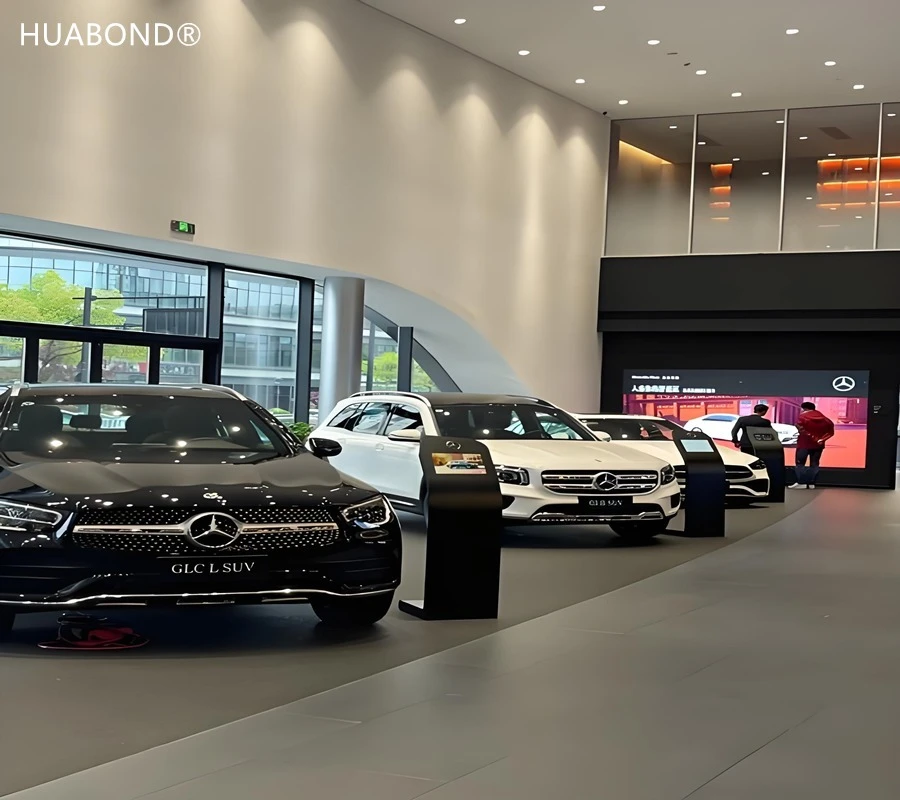
The visual logic of an automotive showroom centers on the vehicle, with the space serving to accentuate it. This necessitates impeccable flatness for wall panels and signage; any waviness, "orange-peel" texture, or uneven joints would be magnified by the showroom lighting, undermining the brand's premium image.
The core structural advantage of aluminum composite panels lies in the high-temperature bonding of the aluminum skins to the core, which imparts exceptional rigidity, ensuring mirror-like flatness even in large formats-a level of quality difficult to achieve with PVC, acrylic, or thin sheet metal.
2.3 Brand Color Consistency
Every automotive brand adheres to strict color specifications. Showroom wall panels, signage, columns, and display wayfinding must all utilize perfectly consistent colors, with no variation between production batches.
Aluminum composite signage panels allow for precise color matching based on Pantone or RAL standards, keeping batch-to-batch color variation within ΔE ≤ 1.5. In the case of Toyota, ALPOLIC®/fr was used for signage panels while ALPOLIC® NC/A1 was used for the façade; despite their differing fire ratings, both materials share identical color tones and surface textures-thereby avoiding the issue common in lower-cost solutions where signage and façade panels fade at different rates.
2.4 Fabrication Flexibility and Installation Efficiency
Renovations of automotive showrooms often need to be completed during limited windows of downtime. Aluminum composite panels can be cut, grooved, and bent using standard woodworking tools, making on-site fabrication extremely convenient.
For large wall areas requiring rapid refurbishment, aluminum composite panels can be prefabricated into modular units for on-site mounting, significantly shortening construction time. Alcoa notes that dealership owners particularly value the cost savings resulting from the "rapid fabrication and installation" capabilities of aluminum composite panels.

III. Key Application Scenarios for Aluminum-Based Branding Solutions
Scenario 1: Showroom Facades and Corporate Identity Walls
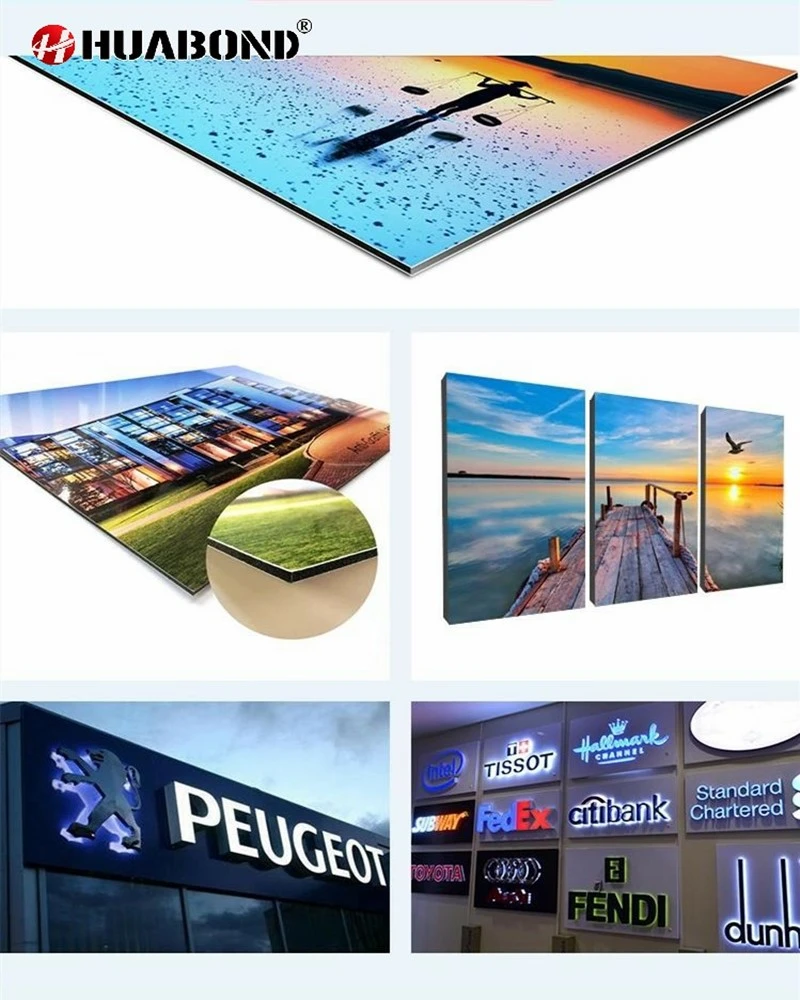
The facade of an automotive 4S dealership serves as the brand's first impression. Aluminum composite panels support large-format panel designs, enabling the creation of seamless, brand-colored wall surfaces. When paired with illuminated or metal lettering, they deliver a powerful visual impact.
Recommended Key Specifications:
- Aluminum Panel Thickness: ≥0.30mm (ensures flatness and wind-load resistance for large panels)
- Coating: HDPE high-performance polyester (8–10 years of color retention) or PVDF fluorocarbon (20+ years; recommended for flagship stores and high-end brands)
- Color: Customized according to the brand's Visual Identity (VI) manual; batch color difference (ΔE) ≤ 1.5
Scenario 2: Interior Brand Walls and Feature Walls
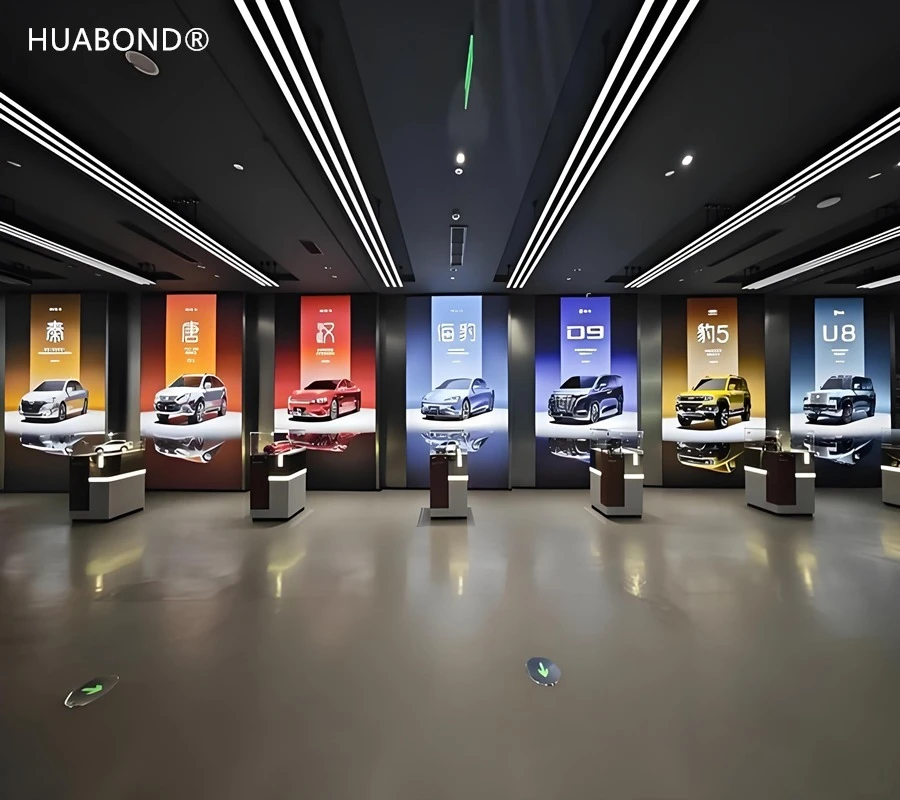
The brand walls, delivery area feature walls, and consultation area partitions within the showroom are the areas where customers spend the most time; they serve as the core medium for brand presentation.
The advantages of aluminum composite panels include:
- They can achieve any level of gloss-from matte to high-gloss-to align with the specific brand identity.
- They can be laminated with decorative films featuring wood grain, brushed metal, or mirror finishes, creating rich textural contrasts.
- Their surfaces are suitable for direct UV flatbed printing, allowing for the precise reproduction of brand graphics, slogans, or vehicle silhouettes.
Scenario 3: Wayfinding Systems and Functional Area Signage
Wayfinding systems in automotive showrooms encompass signage for vehicle display zones, service reception areas, parts display sections, customer lounges, and more. Such signage requires a unified design language and color scheme, while also possessing the durability to withstand daily use.
Aluminum composite panels serve as an ideal substrate for wayfinding systems: they offer excellent flatness and ink adhesion (following UV pre-treatment), allow for edge-bending to create three-dimensional effects, and are lightweight for easy suspended installation.
Scenario 4: Service Area and Workshop Signage
Service reception areas and workshops located behind the showroom demand materials with superior chemical resistance and ease of cleaning. Aluminum composite panels feature a smooth, non-porous surface that does not absorb grease or chemical cleaning agents, allowing for easy cleanup with a damp cloth. Unlike PVC panels, which may discolor in oily environments, aluminum composite panels offer more reliable coating stability.
Marlite's industry solutions highlight the need for modern automotive dealership designs to strike a balance between "high-end aesthetics" and "practical durability"-prioritizing brand quality in showroom areas while requiring resistance to impact, chemicals, and grease in service areas.
IV. What specific aspects should be checked when sourcing aluminum signage panels for automotive brand projects?
Check Point 1: Is the aluminum panel thickness sufficient?
Automotive showroom wall panels and signage are typically large in size, requiring high panel rigidity. We recommend the following specifications:
- Standard indoor brand walls: Aluminum panel thickness ≥ 0.21mm
- Large-area exterior facades: Aluminum panel thickness ≥ 0.30mm
- Extra-large suspended signage: Aluminum panel thickness ≥ 0.30mm (or consider aluminum honeycomb panels)
Check Point 2: Does the coating match brand color specifications?
Automotive brands have extremely low tolerance for color deviation. You must require suppliers to provide physical samples color-matched to brand standards (Pantone/RAL) and obtain color approval before mass production. The contract should specify the acceptable color difference range (ΔE ≤ 1.5) and a protocol for retaining sealed reference samples.
Check Point 3: Is the UV printing pre-treatment adequate?
If showroom signage requires UV flatbed printing of brand graphics, the aluminum panel surface must undergo a specialized UV pre-treatment coating process. On untreated aluminum panels, ink adhesion is extremely poor, and edge curling may occur even in the climate-controlled environment of a showroom. Require suppliers to provide a pre-treatment solution compatible with the UV ink and to verify adhesion via tape pull tests.
Check Point 4: Does the packaging provide sufficient protection for large-format panels?
Brand wall panels for automotive showrooms are often large and have strict surface quality requirements. Any scratches or corner deformations during transport can result in the entire panel being scrapped. Export-grade packaging should include: PE protective film, paper edge protectors on all four corners, and secure reinforcement on wooden pallets.
V. FAQ
Q1: Can aluminum composite panels (ACP) achieve a metallic or brushed finish?
Yes. ACPs can be finished with roll-coated metallic paints or laminated with brushed or mirror-finish aluminum films, creating textures ranging from matte metallic to high-gloss mirror. This is particularly suitable for automotive brand showrooms aiming for a high-tech or industrial aesthetic.
Q2: Can ACPs replace traditional stone or wood veneers for showroom brand walls?
Absolutely-and they offer superior performance. ACPs are lightweight (only one-tenth the weight of stone), quick to install, exceptionally flat, and offer consistent color; they can also realistically simulate decorative finishes like marble and wood grain. For brands requiring rapid renovations or a unified global store image, ACPs are a more cost-effective choice.
Q3: Are there fire safety requirements for panels used in automotive showrooms?
It depends on local building codes. As public commercial spaces, showrooms typically require Class B1 (flame-retardant) materials. If the showroom is located within a large commercial complex or a high-rise building, Class A2 (non-combustible) materials may be required. We recommend verifying local fire safety regulations before selecting materials.
Q4: Can aluminum signage panels be fabricated into curved or three-dimensional shapes?
Yes. By routing the panel, ACPs can be bent into right angles, acute angles, or curves, making them ideal for column cladding, curved feature walls, and 3D brand signage. This bendability is a key fabrication advantage of ACPs compared to aluminum honeycomb panels or solid aluminum sheets.
Q5: Can you provide custom color matching for automotive brand projects?
Yes. We support precise color matching based on Pantone codes or RAL color charts from brand VI manuals and provide physical A4 samples for approval. We retain a reference sample before mass production to ensure color consistency across subsequent batches.
Q6: What experience does HUABOND have in the automotive showroom sector?
With 32 years of experience in manufacturing aluminum signage panels, Hualv supplies aluminum composite signage panels for brand display projects in over 50 countries worldwide. We are well-versed in the automotive industry's stringent requirements regarding color consistency, surface flatness, and long-term durability, and we offer a one-stop service ranging from panel supply to the customization of finished signage.
VI. 32 Years of Manufacturing Expertise: The Core Logic of Material Selection for Auto Showrooms
HUABOND has been manufacturing aluminum signage panels for 32 years. Over this period, we have served showroom projects for dozens of global automotive brands, ranging from flagship stores for European luxury marques to dealership networks across North America.
Our most fundamental insight is this: when selecting materials for auto showrooms, the goal is not simply to choose the "best" material, but the "right" one.
Flagship stores prioritize premium aesthetics and long-term durability, making PVDF coatings and thicker aluminum panels the ideal choice. Dealership networks undergoing rapid renovation focus more on cost-efficiency and delivery speed, making HDPE coatings and standard specifications the more pragmatic option. Indoor brand walls aim for visual impact, allowing for bold choices like brushed finishes, mirror effects, or custom colors; meanwhile, service areas prioritize practicality and durability, favoring HDPE coatings and easy-to-clean surfaces.
Share your brand positioning, showroom type, application areas, and budget with us, and we will leverage our 32 years of material expertise to help you find the "right" solution.
Get Your Aluminum Brand Display Solution for Auto Showrooms
Simply provide your project type (flagship store/standard showroom/service area), application area (facade/indoor brand wall/wayfinding system), and brand color specifications. We will respond within 24 hours with a technical proposal covering panel specifications, coating options, and transparent pricing. We also provide complimentary samples tailored to your needs (international shipping costs to be covered by the client). [Get Your Brand Display Solution and Samples Now]