

Abstract:
PE-coated aluminum coils utilize a polyester resin coating, applied via roller coating and baked to form a continuous, solid film. They represent the most cost-effective pre-coated aluminum solution for interior decoration and home appliance manufacturing.
Key Performance Metrics: Coating adhesion rated at Grade 0. pencil hardness ≥2H. impact resistance of 50 kg/cm with no paint detachment or cracking. The material withstands various processing methods-including cutting, bending, stamping, and roll forming-without the coating peeling or cracking.
Home Appliance Applications: Ideal for refrigerator side panels, doors, and back panels. washing machine casings. air conditioner panels. and the exteriors of microwave ovens and conventional ovens. With a density only one-third that of steel-and over 60% lighter than stainless steel-aluminum also offers thermal conductivity approximately four times greater than steel, facilitating heat dissipation in appliances.
Interior Decoration Applications: Suitable for ceiling panels, partition walls, column cladding, elevator interiors, furniture panels, and wall surfaces in commercial spaces. Available in a wide range of finishes, including solid colors, wood grains, marble patterns, and brushed textures.
Environmental Compliance: Modern PE-coated aluminum coils typically undergo a chromium-free passivation process. High-end variants may feature low-VOC, water-based polyester coatings (VOC ≤ 15 g/L) and hold certifications such as GREENGUARD for indoor air quality, allowing spaces to be occupied immediately after installation without the need for ventilation.
HUABOND (32 Years of Manufacturing Expertise): PE coating is not synonymous with "low-end". rather, it exemplifies the principle of "using the right material for the right application." For interior and home appliance use, PE-coated aluminum offers the optimal balance of cost, performance, and processing efficiency.
Within the family of coatings for pre-painted aluminum coils, PE (polyester) is frequently misunderstood.
Because it is more affordable than PVDF (fluorocarbon), many instinctively categorize it as a "low-end" option. However, for applications such as interior decoration or home appliance manufacturing, this assessment is actually backward-in these sectors, PE is, in fact, the most rational choice.
HUABOND has been producing pre-painted aluminum coils for 32 years. Over these three decades, we have supplied vast quantities of PE-coated aluminum coils to global home appliance brands and interior design projects. We have also frequently witnessed clients waste their budgets by "over-specifying" PVDF for indoor applications. This article aims to provide a clear, comprehensive look at the true performance, ideal use cases, and selection logic for PE-coated aluminum coils.
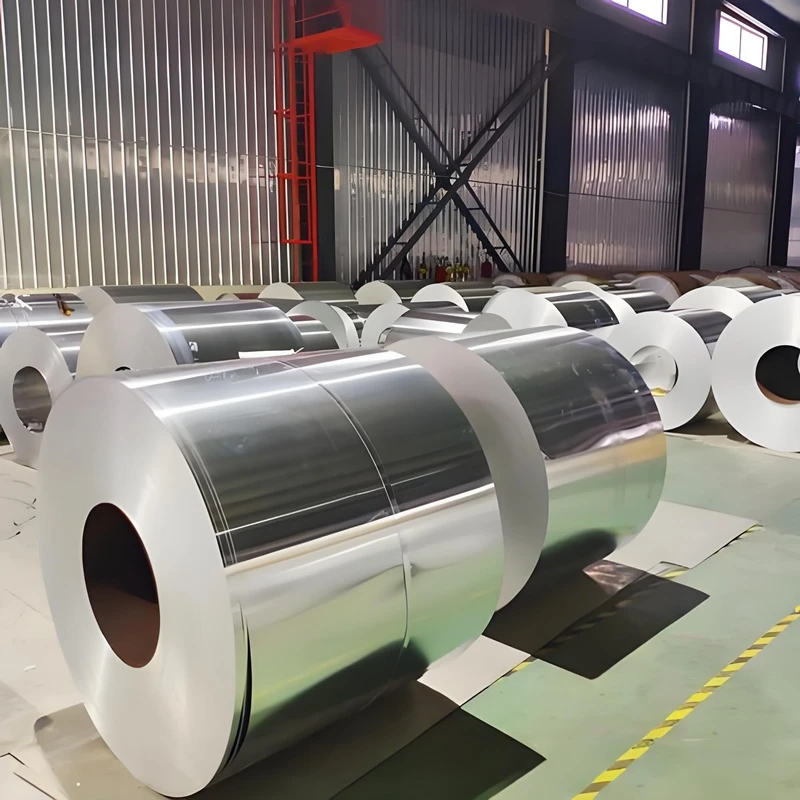
I. What exactly are PE-coated aluminum coils?
A PE (polyester) coating is a finish composed primarily of polyester resin, blended with additives such as alkyd resins and UV absorbers. It is applied uniformly to the surface of aluminum coils via a roller-coating process and subsequently cured at high temperatures to form a continuous, solid film.
This process ensures three key characteristics:
First, the coating thickness is precise and controllable. Roller coating allows for stable, consistent control of the dry film thickness-typically 18μm or greater-ensuring high uniformity across different production batches.
Second, the adhesion is chemical in nature. Before coating, the aluminum coils undergo degreasing and a chromium-free passivation treatment. This creates chemical bonds between the coating and the aluminum substrate, rather than relying on simple physical adhesion. The coating meets the highest standard for adhesion (Grade 0) and possesses a pencil hardness of 2H or greater.
Third, the coating remains robust during fabrication. This is the primary advantage of PE-coated aluminum in the home appliance and interior decoration sectors. PE-coated aluminum coils can easily withstand cutting, bending, stamping, and roll-forming without the coating peeling or cracking, even under complex deformation. In standard impact resistance tests, the coating shows no signs of detachment or cracking at an impact force of 50 kg/cm.
II. The True Meaning of "High Cost-Performance" for PE Coatings
2.1 The Source of Cost Advantages
The cost-performance ratio of PE (polyester) coatings cannot be simply summarized as "cheap." It stems from three structural factors:
Lower raw material costs. The raw materials for polyester resins are significantly less expensive than those for PVDF (fluorocarbon) resins, which serves as the foundation for the lower unit price of PE-coated aluminum coils.
Highly efficient roll-coating process. The continuous, automated roll-coating production line ensures high efficiency, keeping both material waste and labor costs to a minimum.
No additional processing burden. PE-coated aluminum coils are ready for immediate stamping, bending, or installation upon arrival, requiring no secondary coating or surface treatment. For high-speed, precision production lines-such as those in the home appliance industry-this ensures both a high yield rate and optimal production throughput.
2.2 A Crucial Distinction: PE's "Home Turf" Is Indoors
PE coatings are designed specifically for indoor applications and general protective purposes. While they offer sufficient UV resistance to withstand indoor lighting and diffused light filtering through windows, they are not suitable for long-term outdoor exposure. For outdoor curtain walls or roofing, high-performance HDPE (High-Density Polyethylene) or PVDF (polyvinylidene fluoride) coatings are required.
This is not a "flaw" of PE, but rather a reflection of its intended purpose. In contexts such as interior decoration and home appliances, the performance provided by PE coatings fully meets-and covers-all practical requirements. Paying a premium for PVDF-a material designed for far harsher conditions-for something like the side panel of a refrigerator or an office ceiling (neither of which is exposed to direct UV radiation) represents a budgetary mismatch rather than an upgrade in quality.
III. Home Appliance Applications: What Are PE-Coated Aluminum Coils Replacing?
3.1 Replacing Stainless Steel and Galvanized Sheets
The home appliance industry is undergoing a shift in materials. Aluminum has a density of approximately 2.7 g/cm³, whereas the density of stainless steel is nearly 7.8 g/cm³. For an equal volume, an aluminum panel weighs less than one-third of an equivalent stainless steel panel.
What does this difference mean for home appliances?
Reducing the weight of a refrigerator or washing machine cabinet directly lowers logistics and warehousing costs. Furthermore, aluminum's thermal conductivity is about four times that of steel. for appliance components that require heat dissipation-such as areas around compressor compartments or oven exteriors-aluminum panels can function as an integral part of the heat-dissipation structure.
In terms of costs, pre-painted aluminum coils are replacing certain stainless steel components, allowing for the control of raw material costs without compromising quality.
3.2 Specific Applications
Typical applications for PE-coated aluminum coils in home appliances include:
Refrigerators: Side panels, door panels, back panels, and freezer compartment liners.
Washing machines: Cabinet bodies, front and rear covers, and decorative panels.
Air conditioners: Indoor unit panels and outdoor unit casings.
Microwave ovens and conventional ovens: Outer casings, control panel frames, and door frames.
Kitchen appliances: Range hood panels, water heater casings, and humidifier housings.
Common requirements for these components include a smooth appearance, consistent color, resistance to corrosion in humid environments, ease of cleaning, and the ability to withstand stamping and bending processes. PE-coated aluminum coils meet all these criteria, while also being significantly more cost-effective than fluorocarbon-based alternatives.
3.3 Surface Functional Options
PE-coated aluminum coils for home appliances can also feature additional functional surface treatments, such as anti-fingerprint, stain-resistant, and scratch-resistant properties. Available surface finishes include solid colors, matte, high-gloss, pearlescent, and wood-grain patterns, allowing for alignment with the distinct brand identity of various products.
IV. Interior Decoration Applications: Use Cases for PE-Coated Aluminum Coils
Interior decoration is another major application area for PE-coated aluminum coils. The underlying rationale is straightforward: indoor environments are not subjected to intense, sustained ultraviolet (UV) exposure, making the weather resistance of PE coatings more than sufficient. Furthermore, the requirements for interior decoration-such as surface flatness, color variety, processing flexibility, and installation efficiency-align perfectly with the inherent strengths of aluminum coil materials.
Scenario 1: Ceiling Systems
PE-coated aluminum coils are a well-established material for ceiling panels and linear ceiling systems. Lightweight, moisture-resistant, and mold-proof, they are ideal for large-scale ceiling applications in offices, commercial spaces, and corridors. For areas outside the primary visual focus-such as service corridors or storage zones-PE coatings offer a practical and cost-effective solution.
Scenario 2: Interior Wall Cladding and Partitions
PE-coated aluminum coils are used for interior wall panels, partition systems, and the surface layers of decorative composite panels. They can be finished with solid colors, wood grains, or marble patterns, serving as an alternative to stone or wood veneers while weighing only a small fraction of the weight of natural stone.
Scenario 3: Elevator Interiors and Column Cladding
Thanks to their excellent flatness and workability, PE-coated aluminum coils are well-suited for cladding elevator car interiors, door frames, and escalator side panels. They can conform to curved or complex, non-standard shapes, requiring no further finishing after installation.
Scenario 4: Furniture and Commercial Displays
For cabinet panels, display racks, shelving units, and checkout counter surfaces, the diverse color palette and surface textures of PE-coated aluminum coils provide a high-quality, cost-effective finishing solution for commercial spaces.
Scenario 5: Spaces with Indoor Air Quality Requirements
Modern PE-coated aluminum coils have made significant strides in environmental sustainability. They utilize chromium-free passivation, and some high-end products feature low-VOC, water-based polyester coatings-with VOC levels controlled at ≤15g/L. These products often meet standards such as the GREENGUARD indoor air quality certification. they are virtually odorless upon installation, allowing spaces to be used immediately without the need for a ventilation period. This represents a significant advantage for settings where indoor air quality is critical, such as hospitals, schools, kindergartens, and elderly care facilities.
V. PE Coating vs. PVDF: A Comparison Guide for Choosing the Right Option
| Comparison Criteria | PE (Polyester) Coating | PVDF (Fluorocarbon) Coating |
| **Intended Use** | Interior decoration, home appliances, short-term outdoor use | Architectural curtain walls, long-term outdoor exposure |
| **Coating Thickness (Standard)** | ≥18μm | ≥25μm |
| **Adhesion** | Grade 0 | Grade 0 |
| **Pencil Hardness** | ≥2H | ≥2H |
| **Impact Resistance** | No paint detachment at 50kg/cm | No paint detachment at 50kg/cm |
| **Formability** | Excellent. no cracking during bending, stamping, or roll forming | Good. however, the thicker coating requires caution during complex forming |
| **Color & Surface Finish** | Solid colors, wood grain, marble patterns, matte, high-gloss, pearlescent | Primarily solid and metallic colors. FEVE available for high-gloss options |
| **Eco-friendly Options** | Chrome-free treatment. low-VOC water-based options available | Chrome-free treatment |
| **Relative Cost** | Low | High (1.5 to 2+ times that of PE) |
| **Suitability for Interiors/Appliances** | Highly recommended | Unnecessary (performance exceeds requirements) |
| **Suitability for Long-term Outdoor Use** | Not recommended | Highly recommended |
**Decision Summary:** Choose PE for interior applications and home appliances. Choose PVDF (fluorocarbon) for long-term outdoor use. Don't pay for performance you don't need, and don't cut costs in the wrong places when weather resistance is required.
VI. Frequently Asked Questions (FAQ)
Q1: What is the service life of PE-coated aluminum coils for indoor use?
In an indoor environment, PE-coated aluminum coils typically have a service life of over 10 years, with stable color and surface texture. Since there is no constant exposure to ultraviolet (UV) radiation or extreme temperature fluctuations indoors, the degradation rate of the coating is significantly lower than it would be outdoors.
Q2: What is the difference between PE coatings and HDPE coatings?
PE refers to standard polyester coatings, designed for indoor applications and home appliances. HDPE (High-Durability Polyester) is a high-performance variant with an optimized formulation that enhances outdoor weather resistance, offering an outdoor service life of approximately 6–9 years. The distinction is not about which is "better," but rather about the intended application: standard PE is suitable for indoor use and home appliances, while HDPE is intended for general outdoor exposure.
Q3: Can PE-coated aluminum coils be bent or stamped? Will the coating crack?
Yes. The formability of PE-coated aluminum coils is a key advantage for their use in home appliances and decorative applications. They typically withstand an impact of 50 kg/cm without paint peeling or cracking, ensuring the coating remains intact during bending and stamping processes. Specific limits for bending radii and stamping depths should be confirmed with the manufacturer based on the thickness of the aluminum coil and the coating.
Q4: What are the advantages of PE-coated aluminum coils for home appliances compared to stainless steel?
There are three core advantages: Weight (aluminum has a density of ~2.7 g/cm³ compared to ~7.8 g/cm³ for stainless steel, resulting in a weight reduction of over 60%), Thermal Conductivity (aluminum's thermal conductivity is approximately four times that of steel, which aids in heat dissipation), and Cost (pre-painted aluminum coils offer lower raw material costs without compromising quality).
Q5: Are PE-coated aluminum coils environmentally friendly? Are they suitable for hospitals and kindergartens?
Yes. Modern PE-coated aluminum coils generally undergo a chromium-free passivation process. High-end, low-VOC water-based polyester coatings-which contain ≤15 g/L of VOCs and are GREENGUARD-certified-are formaldehyde-free and odorless. Spaces such as hospitals, schools, and kindergartens-where indoor air quality is critical-can be used immediately after installation without the need for a ventilation period.
Q6: Do you provide free samples of PE-coated aluminum coils?
Yes. We provide free A4-sized samples in standard colors for you to evaluate the color, texture, and processing performance. however, international shipping costs are to be covered by the customer. For custom-colored samples, a small color-matching fee may apply, which will be refunded once a bulk order is confirmed.
Q7: What are the minimum order quantity (MOQ) and lead time for PE-coated aluminum coils?
For standard colors and specifications, the MOQ is typically between 500 kg and 1 ton. The lead time for standard specifications is approximately 15–20 days, while custom colors and special widths require about 20–25 days. Exact timelines will be confirmed based on the specific order requirements and current production scheduling.
VII. Material Selection Advice Based on 32 Years of Industry Experience
HUABOND's 32-year journey has evolved alongside the development of pre-painted aluminum coils. We have supplied PE-coated aluminum coils to global home appliance brands and delivered PVDF solutions for landmark curtain wall projects.
Our most significant takeaway from these 32 years is this: the most expensive material is not necessarily the "right" solution.
A refrigerator side panel does not require 20 years of outdoor weather resistance, nor does an office ceiling need the salt-spray resistance provided by a fluorocarbon (PVDF) coating. In such applications, a PE coating-offering Grade 0 adhesion, a hardness of ≥2H, 50 kg/cm impact resistance, and excellent formability-provides performance that is more than sufficient. This balance of "perfectly adequate" and "economical" is the very essence of high cost-effectiveness.
Share your specific application (e.g., home appliance components, interior decoration, or commercial spaces), processing methods, and surface finish requirements with us. Leveraging our 32 years of expertise in material specification, we will help you determine whether a PE coating is the "right" choice-and, if so, which specific grade of PE is best suited to your needs.
Get a Tailored Solution and Samples for PE-Coated Aluminum Coils
Email us your application details, processing methods, and surface finish requirements. Within 24 hours, we will provide a technical proposal-including alloy recommendations, coating specifications, and transparent pricing. We also offer free samples in standard colors (international shipping costs to be covered by the client).
[Request Your Technical Proposal and Samples Now]