

Entering 2026, the global construction industry, driven by both low-carbon policies and complex landmark designs, is placing unprecedented demands on exterior wall materials. Aluminum honeycomb panels, with their ultra-flat surface, high strength, lightweight, and life-cycle recyclability, are rapidly transforming from a "bonus" for high-end curtain walls into a "must-have" for many large public buildings. However, cost pressures and technological barriers coexist, presenting both market opportunities and challenges. This article will analyze this trend in depth, based on the latest industry data for 2026.
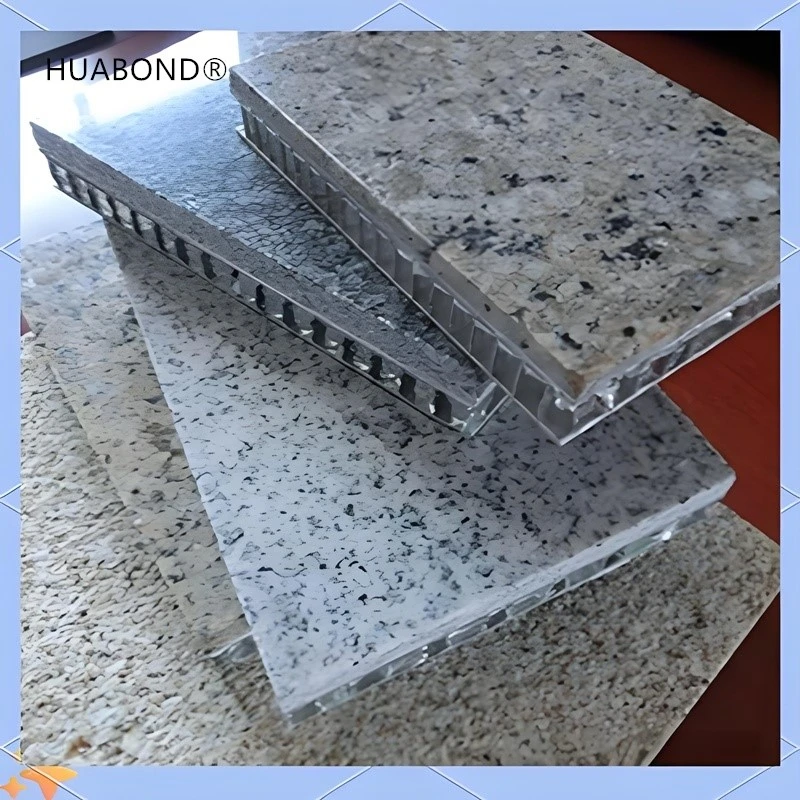
I. Market Overview in 2026: Steady Growth, China Leading the Way
According to the latest "Global Aluminum Honeycomb Panel Industry Market Research Report (2026 Edition)," the global aluminum honeycomb panel market size reached approximately RMB 18.83 billion in 2025 and is projected to exceed RMB 22.27 billion by 2032, maintaining a compound annual growth rate of 2.4%~2.5%. China continues to lead the global market, accounting for approximately 41% of the global share.
Growth is driven by two main directions:
- Urban renewal and renovation of old residential areas are entering a substantial boom phase, significantly increasing the demand for lightweight, heat-insulating, and easy-to-install exterior wall materials.
- "Dual carbon" targets are forcing architects to choose materials with high recyclability and low carbon emissions during production, highlighting the full life-cycle advantages of aluminum honeycomb panels.

II. Three Major Opportunities: The Core Trend of Aluminum Honeycomb Panels in 2026
Opportunity 1: Green and Low-Carbon – Recyclable Closed-Loop Becomes a Key Bidding Indicator
In 2026, ESG evaluation systems have been extensively incorporated into the bidding evaluation criteria for large-scale construction projects. Aluminum honeycomb panels use aluminum alloy for both the front and back panels, and aluminum foil for the core material. After disposal, nearly 100% of the metal can be recycled through pyrolysis separation technology. The carbon emissions of recycled aluminum are only about 5% of those of primary aluminum. Compared to the pain points of stone mining pollution, high energy consumption of glass, and the difficulty in separating traditional composite panels, aluminum honeycomb panels have a clear "green passport" advantage.
Opportunity 2: Irregular Curtain Walls – The Best Carrier for Realizing Free-form Architectural Surfaces
Top architectural designs in 2026 increasingly pursue visually striking forms such as hyperboloids, streamlined shapes, and large cantilevered sections. Traditional aluminum single panels struggle to guarantee flatness with large panels, while aluminum honeycomb panels, thanks to their sandwich structure, can maintain a deflection of ≤10mm even with panels up to 12 meters long and large spans, and can perfectly fit 3D models such as Rhino (deviation <2mm). In the recently announced 2026 Polaris Architecture Awards, several curtain wall projects using hyperboloid aluminum honeycomb panels won awards, signifying that this material has become a "technical standard" for high-end landmark facade designs.
Opportunity 3: Intelligent Manufacturing – Differentiated Competition and Rapid Delivery
Previously, the aluminum honeycomb panel industry suffered from severe homogenization. In 2026, leading companies, by introducing robotic welding, fully automated coating lines, and digital cutting centers, not only improved product precision to within ±0.5mm but also compressed the supply cycle of conventional panels to 7-10 days. This flexible manufacturing capability makes it possible to undertake large-scale public construction and overseas EPC projects, becoming a key bargaining chip for foreign trade factories to win over major clients.
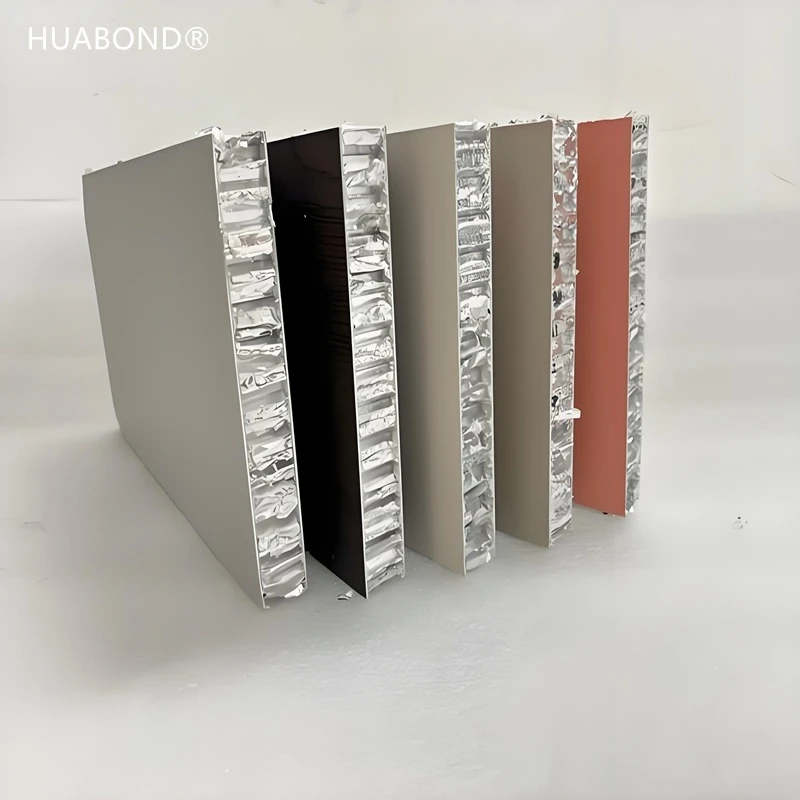
III. Key Challenges: How to Avoid Low-Price Traps and Technological Pitfalls
Challenge 1: Price Competition and Brand Barriers
Many small workshops in the market still lower their prices by reducing aluminum sheet thickness, using non-weather-resistant adhesives, and reducing core material density, leading end customers to question the quality of aluminum honeycomb panels. How to demonstrate high cost-effectiveness in B2B scenarios using engineering case studies and durability test reports (such as wind pressure resistance and 3000-hour salt spray resistance) is a challenge that all legitimate manufacturers must address.
Challenge 2: High Thresholds for Fire Resistance and Structural Safety
With the Ministry of Housing and Urban-Rural Development further tightening its requirements for the fire resistance rating of exterior wall materials for high-rise buildings, the outdoor application of ordinary aluminum honeycomb panels (Class B) is restricted in some areas. To achieve Class A2 fire resistance, non-combustible core materials or special fire-retardant structures are required, which places higher demands on production processes and cost control. In 2026, manufacturers capable of supplying Class A2 aluminum honeycomb panels in bulk will gain significant pricing power in the public building market.
Challenge 3: Certification and Technical Barriers for Exporting Overseas
For foreign trade websites, target markets (such as the EU, the Middle East, and Southeast Asia) have varying requirements for aluminum honeycomb panels, including CE certification, ASTM standards, and wind pressure testing. Furthermore, overseas customers are extremely concerned about the compatibility of installation systems. If complete node designs and anchoring solutions cannot be provided, simply selling panels will lead to price competition.

IV. 2026 Procurement Decision Guide: Five Steps to Selecting a Reliable Supplier
For architects, contractors, and foreign trade buyers, we recommend evaluating aluminum honeycomb panel suppliers from the following five dimensions:
1. Check Production Capacity and Delivery Time: Does the supplier have at least two fully automated composite production lines? Can it handle urgent projects exceeding 50,000 square meters?
2. Check Case Studies: Are there completed high-rise, irregularly shaped, or overseas landmark projects? Do the case photos match the contracts?
3. Check Testing Reports: Does the supplier provide reports from the National Building Materials Testing Center on wind pressure resistance, temperature difference resistance (-40℃~80℃ cycle), salt spray corrosion, and fire resistance ratings?
4. Check Surface Finishing: Does the fluorocarbon coating meet AAMA 2605 standards? Does the anodizing process offer a 20-year warranty?
5. Check Installation Services: Are the supplier willing to provide on-site technical guidance or detailed node design drawings? This is especially important for foreign trade projects.

In conclusion, the building exterior wall materials market in 2026 is shifting from a "low-price-wins-all" approach to a competition based on comprehensive capabilities including "technology, environmental protection, and delivery." Aluminum honeycomb panels, with their unique advantages such as lightweight, high flatness, recyclability, and ease of processing, are ushering in their golden age. For contractors and overseas buyers, choosing a manufacturer that can provide both stable supply and detailed design support will be crucial for project success.
Your next landmark project deserves a better aluminum honeycomb panel.
Publication Date: June 13, 2026
*If you are looking for a reliable aluminum honeycomb panel supplier, please visit HUABOND Product Center to view detailed specifications and project cases, or contact our engineers directly for free technical consultation.*