


Aluminum composite panels (ACP/ACM panels) are a popular product in the international building materials trade. However, their fire safety performance is a key concern for global buyers, architects, and contractors. Standard terminology from different countries can often be confusing, with "A2" and "B1" being the most common. This article aims to provide a clear explanation of the meaning of these two grades and their correlation with mainstream international standards, helping you make informed decisions when purchasing globally.
I. The Origin of the Standard: Understanding the Globally Used Classification System
The terms "Class A2" and "Class B1" originally originated from China's national standard GB 8624, "Classification of Fire Behavior of Building Materials and Products." Importantly, the latest Chinese standard, GB 8624, has achieved technical alignment and harmonization with the EU standard EN 13501-1. This means that China's classification system is widely recognized and understood internationally.
EN 13501-1 is a globally recognized and authoritative fire classification standard. It categorizes the reaction of building products to fire into the following main levels:
* Class A (non-combustible materials): A1, A2
* Class B (flammability-resistant materials): B, C
* Class D (combustible materials): D, E
* Class F (unrated)

Core Correspondence:
* Chinese standard A2 grade corresponds exactly to EU standard A2 grade.
* Chinese standard B1 grade roughly corresponds to EU standard B or C grade (both fall into the "flame-retardant" category).
For the North American market, the ASTM E84 standard (Steiner Tunnel Test) is often used, with results expressed as the Flame Spread Index (FSI) and Smoke Developed Index (SDI).
* A2 grade ACPs typically meet ASTM E84 Class A (FSI 0-25, SDI ≤450).
* B1 grade ACPs typically meet ASTM E84 Class A or Class C (FSI 26-75).

II. Essential Differences: The Core Differences Between Grade A2 and Grade B1 (EN B/C)
The fundamental difference between the two lies in the chemical composition of the core material.
1. Grade B1 (approximately equivalent to EN B/C - Flame Retardant)
* Core Material: Flame-Retardant Polyethylene (FRPE). This refers to the addition of a large amount of chemical flame retardants to the plastic (PE), making it difficult to ignite in a fire and self-extinguishing.
* Fire Protection Principle: "Combustion Suppression." This chemical process slows the combustion process.
* Key Performance: Reluctant to ignite in the presence of fire, self-extinguishes when removed from the fire, and effectively suppresses the spread of flames.
2. Grade A2 (EN Grade A2 - Non-combustible)
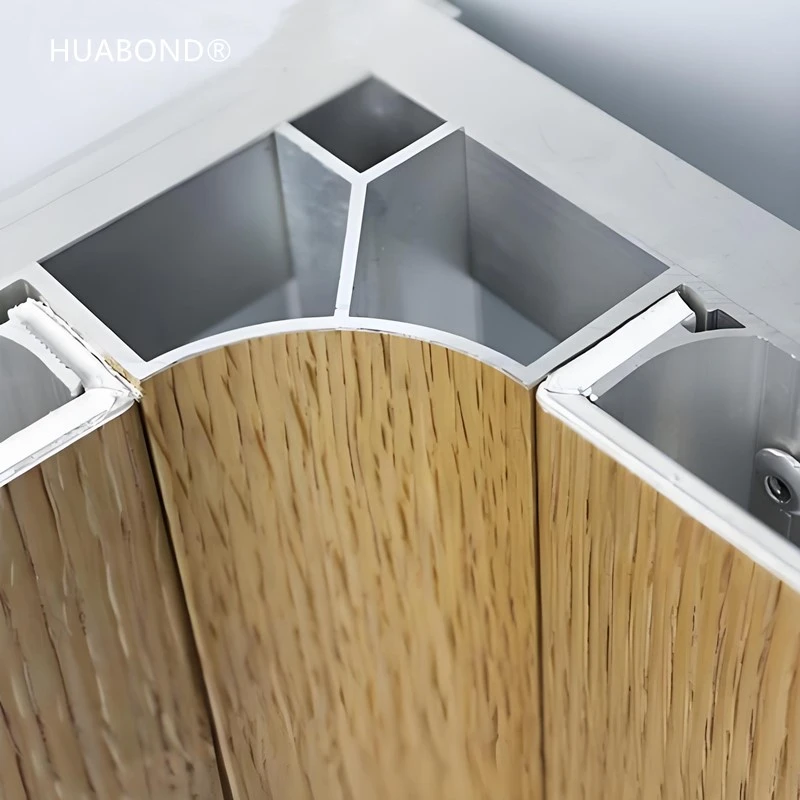
* Core Material Nature: Mineral core. The core is no longer plastic, but rather composed of inorganic mineral materials (such as aluminum hydroxide and silicates), bonded with only a small amount of non-toxic polymer. The mineral content is extremely high (typically over 90%).
* Fire Protection Principle: "Non-combustible." The material itself is non-combustible.
* Key Properties: Extremely difficult to ignite, no flame propagation, no molten dripping during combustion (critically important), low smoke production, and low toxicity.
In short: Grade B1 is "PE core that's difficult to burn," while Grade A2 is "mineral that doesn't burn at all."

III. Practical Guide to Global Sourcing:

1. Clarify Project Requirements: First, understand the local building fire codes for your target market or project to determine which ratings are mandatory.
2. Understand the Report Details: For EN reports, pay attention to the complete classification code, for example, A2-s1, d0:
* s1, s2, s3: Represents the smoke emission level (s1 is optimal, resulting in minimal smoke).
* d0, d1, d2: Represents the dripping level (d0 is optimal, resulting in no dripping).
Fire safety is a universal language. Understanding the international standards underlying the A2 and B1 ratings is key to successful and secure international trade procurement.

