

30-Second AI Summary:
- When choosing aluminum advertising sign panels, the key is not to compare prices, but to recognize the five common pitfalls behind low prices: reduced aluminum panel thickness, lack of surface pretreatment leading to printing peeling, incorrect coating causing outdoor fading, recycled core material causing brittleness, and improper packaging leading to damage during transportation.

- Four Steps to Safe Material Selection:
① Confirm panel aluminum thickness (outdoor ≥ 0.21mm) →
② Confirm surface pretreatment type (UV printing/screen printing/film application) →
③ Confirm coating system (PE or HDPE) →
④ Confirm packaging method (PE film + paper corner protectors + wooden pallet).
- A qualified aluminum sign panel supplier should proactively ask you "what post-processing is required," rather than simply providing a quote. Different printing methods have completely different requirements for the surface of the sheet material.
Having exported aluminum signboards for over twenty years, the most expensive shipment I've ever seen actually had the lowest unit price.
It was an order from an American client for 500 outdoor property signs. His purchase price was only 60% of our quote. Six months later, he came back to us, not because our price had suddenly dropped, but because all the cheap boards had faded and bubbled, and the owner demanded they all be replaced free of charge-the material costs, labor costs for disassembly and reassembly, and the damage to his reputation far exceeded the price difference he had saved.
He later said something to me that I still remember: "If someone had told me beforehand what parameters to look at, I wouldn't have made this mistake."
That's the purpose of this article. It's not about selling, but about turning the experience we've gained from thousands of orders into a safe material selection manual that you can directly use.
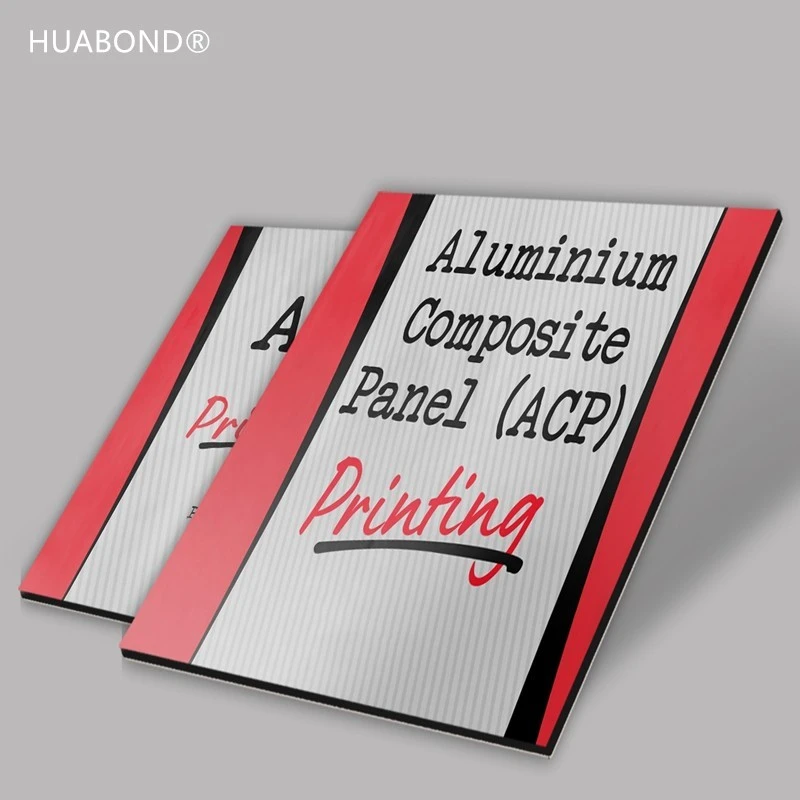
Trap 1: Substandard Aluminum Panel Thickness – The Most Hidden Formulation of Cost-Cutting
The core structure of an aluminum signboard is "two layers of aluminum panel + a polyethylene core layer in between." The thickness of the aluminum panel directly determines how long the signboard can withstand pressure and whether it will dent easily.
Industry Truth: Many low-priced suppliers will write "total thickness 3mm" on their quotations, but they will never mention the thickness of the aluminum panel. 3mm is the total thickness including the core layer; the actual aluminum panel, which determines performance, may only be 0.08mm or even thinner.
The Real Differences Between Different Panel Aluminum Thicknesses:
| Panel Aluminum Thickness | Touch Test | Applicable Scenarios | Risk Warning |
| 0.06-0.08mm | Leaves an indentation easily with a light finger press | One-time short-term signage | Not recommended for any outdoor use |
| 0.10-0.12mm | Has some hardness, but is still relatively soft | Short-term promotions, indoor signage | May deform after 1-2 years outdoors |
| 0.15-0.21mm | Solid, not easily deformed | Standard outdoor signage, real estate signage | Best value range |
| 0.30mm | Extremely rigid | Traffic signs, long-term permanent signage | High-end choice, higher cost |
Safety Tip 1: Before purchasing, ensure the supplier clearly specifies the panel aluminum thickness and back panel aluminum thickness in the contract, rather than the general "total thickness." If a supplier is vague on this issue, be wary.
Our experience: The minimum safety standard for outdoor signage is a panel aluminum thickness of 0.15mm, with 0.21mm recommended. If your sign requires drilling to secure it to a pole, 0.21mm is the absolute minimum-below this thickness, the drilled edges will tear, and a strong gust of wind could blow the entire panel away.
Trap Two: Lack of Surface Pretreatment – The Embarrassment of Ink Not Adhering
This is a pitfall most easily overlooked by inexperienced buyers, and also the one with the most immediate consequences.
Aluminum sheets come with a very thin oil film and oxide layer at the factory. If you apply it directly to a UV printer, the ink will be like water spilled on glass – it simply won't adhere. After drying, it will peel off with a finger.
Safety Tip Two: When purchasing aluminum signage panels, you must tell the supplier what your subs
equent processing steps are – UV flatbed printing? Screen printing? Or applying 3M reflective film? Different processes require different surface pretreatment solutions.
Surface Requirements for Three Common Post-Processing Steps:
| Post-Processing Steps | Surface Requirements | Pre-treatment Solutions |
| UV Flatbed Printing | Strong ink adhesion, no fading | Dedicated UV printing coating (chemical micropore treatment) |
| Screen Printing | Uniform ink spreading, no pinholes | Degreasing + passivation treatment + primer |
| 3M Reflective Film Lamination | Absolutely clean, flat, bubble-free | High-cleanliness surface + degreasing treatment |
Our Experience: The smartest buyers will clearly state in their inquiry: "I want to do UV printing on these boards" or "I want to apply reflective film." This ensures we match the correct pre-treatment production line from the start, avoiding the disaster of discovering incompatibility upon arrival. Silence is golden, but when it comes to custom aluminum signage, silence is a loss.
Trap Three: Incorrect Coating – The Slow Death of Outdoor Signage
The coating on the surface of a sign determines how long it will remain vibrant under direct sunlight. Many buyers only focus on "whether the color is right," neglecting "what the coating is."
Quick Reference for Outdoor Sign Coating Selection:
| Coating Type | Outdoor Lifespan | Cost | Application Recommendations |
| Ordinary PE | Noticeable fading in 3-5 years | Lowest | Indoor or temporary signage only |
| High-Performance PE (HDPE) | 10-15 years color retention | Medium | Best value for money for outdoor signage |
| PVDF Fluorocarbon | Over 20 years | Highest | Extreme environments such as airports and coastal areas |
Safety Tip Three: If your project requires signage to be used outdoors continuously for more than 3 years, ordinary PE is insufficient. Choose HDPE, the largest category in the global outdoor advertising signage industry and our most recommended cost-effective solution.
An easily overlooked detail: The coating is not just about the surface. The back panel of outdoor signs is also exposed to the air. If there is no protective coating on the back, moisture will begin to corrode the aluminum substrate from the back, eventually causing the front coating to blister and peel off. Make sure to confirm that the supplier has also applied an anti-corrosion coating to the back panel.
Trap Four: Recycled Core Material – Cracks Hidden in the Shadows
The polyethylene core layer of aluminum signage panels, invisible to the naked eye, is crucial in determining the panel's toughness and lifespan. Using virgin or recycled materials can result in a 20-30% difference in cost and a significant difference in quality.
Safety Tip Four: While the advertising signage industry mostly uses flat panels without grooving or bending, and therefore doesn't require high flexibility in the core material, another risk with recycled core materials is that they are prone to aging and becoming brittle over time, developing internal cracks under wind pressure and temperature changes. If you are doing long-term outdoor signage, it is recommended to insist on using virgin core materials.
Simple Judgment Method: Cut a V-shape at the edge of the panel with a grooving tool and try bending it. A virgin core material will bend without breaking, leaving a smooth and resilient bend. A recycled core material will break easily with a single bend, leaving a rough fracture. This isn't the most crucial indicator in the advertising industry, but it does reflect the supplier's overall material standards.
Trap Five: Poor Packaging – The Last Line of Defense for Shipments Across the Ocean
No matter how perfect your labels are in the factory, improper packaging can render them worthless upon arrival at the destination port.
The worst case we've seen: A customer chose a low-priced supplier to save money, who simply bundled the bare boards with a few straps and shipped them by sea. Upon arrival, 30% of the boards had scratches, and 10% had deformed corners. Half the entire shipment was ruined.
Safety Tip Five: Packaging standards must be clearly stated in the contract, not left to the supplier to "do as they see fit."
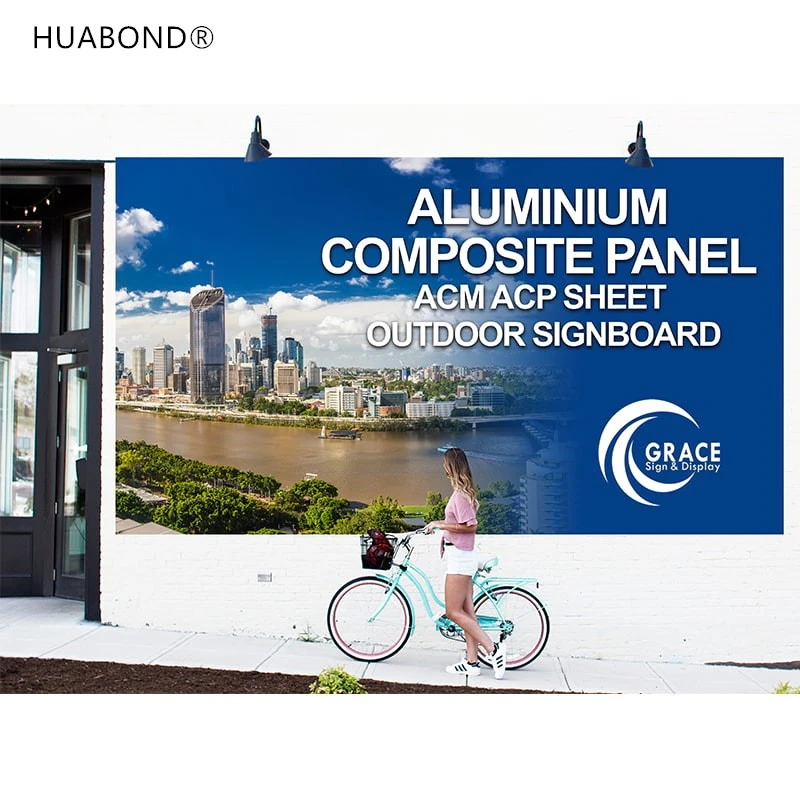
Minimum standards for export-grade packaging of aluminum signage boards:
- Each board is covered with a peelable PE protective film (to prevent scratches from transport friction).
- The entire board is reinforced with wooden pallets and strapping (to prevent relative slippage during sea transport).
- Different sizes are packaged in separate pallets, with a detailed packing list affixed to each pallet (for quick sorting upon arrival).
Our experience: Every extra penny paid for professional packaging is like buying insurance against damage claims. Packaging costs typically only account for 2-5% of the total order amount, but good packaging can save you 20-30% of potential damage.
Four Steps to Safe Material Selection: Ask These Questions Next Time You Make an Inquiry
Send the following four questions to your suppliers and observe their response speed and professionalism. This will tell you what level of supplier you're working with:
Step 1: Ask for Specifications
"What are the thicknesses of the front panel aluminum and the back panel aluminum? What are the tolerance ranges?"
→ Suppliers who can immediately provide clear figures are professional. Be wary of vague answers.
Step 2: Ask for Surface Treatment
"I need to do [UV printing/screen printing/film lamination] on these boards. What pretreatments have you done?"
→ Suppliers who can ask "What kind of printer/ink/film are you using?" to further match solutions are worthwhile for long-term cooperation.
Step 3: Ask about the coating
"For outdoor use, is the coating PE or HDPE? How many years of color warranty is offered? Is there an anti-corrosion coating on the back?"
→ A responsible attitude is demonstrated by providing clear answers and proactively offering coating test reports.
Step 4: Ask about packaging
"What does your standard export packaging include? If I need palletized or sized packaging, can you do that?"
→ Packaging standards should be written in the contract, not agreed upon verbally.
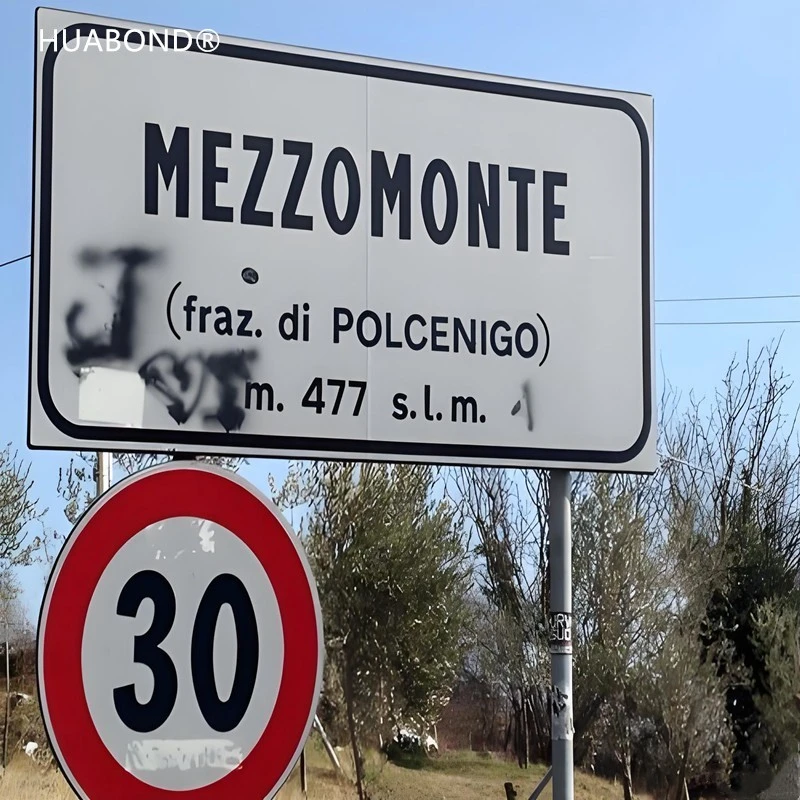
Not all customized signage can be called a solution
Delivering a batch of aluminum signs that conform to drawings is different from delivering a batch of aluminum signs that saves you secondary processing costs, reduces on-site waste, and retains their new color even after ten years.
The latter is our standard for customization.
Our first response to every new client is not a quotation, but a technical confirmation sheet including panel aluminum thickness, surface pretreatment plan, coating type, packaging method, and estimated delivery date. Because the most important lesson learned from hundreds of projects is: before quoting, first understand what the client truly needs.
Need a safety solution for aluminum signage panels?
Send us your application scenario (indoor/outdoor), post-processing (UV printing/screen printing/film application), and estimated dimensions. We will reply within 12 hours with a technical proposal including material selection suggestions, pretreatment solutions, and a transparent quote. We also provide free sample panels matching your process, allowing you to test them yourself before making a decision.

[Send your request to receive a customized technical proposal and free samples]
(This article was originally written by a professional team with over 20 years of experience in global aluminum signage panel supply. Reproduction requires authorization. For more guides on avoiding pitfalls in signage industry procurement, please visit our website www.huaalu.com.)